Planning a root canal and post with Americo Dental benefits in Huntersville? This guide explains the procedure, recovery, and how out-of-network benefits work at Reimels Dentistry.
A tooth that needs a root canal has been damaged where you cannot see it. Decay or a crack has reached the soft pulp inside, and the tooth is now painful, infected, or both. A root canal clears out that damaged pulp so the natural tooth can stay in your mouth. When a lot of tooth structure has been lost, a dentist may also recommend a post to help anchor the final restoration. This article walks through what the treatment involves, what recovery looks like, how to avoid common myths, and how Americo and Delta Dental members can use their out-of-network benefits toward care at Reimels Dentistry in Huntersville, NC.
What Does “Experience Quality Care: Root Canal and Post at Americo Dental” Actually Mean for You?
Americo is a dental insurance carrier, not a dental office. The phrase people search for blends two separate questions: what quality root canal care looks like, and how their Americo benefits might help pay for it.
Reimels Dentistry is out-of-network with Americo. Reimels Dentistry is also out-of-network with Delta Dental. The practice is in-network with Blue Cross Blue Shield GRID+ only. Every other carrier is handled on an out-of-network basis, and Medicaid and Medicare are not accepted.
That does not mean an Americo or Delta Dental member cannot be treated here. It means your plan’s out-of-network rules decide what it reimburses, and you should confirm those rules with your plan before treatment.
What Is a Root Canal, and Why Is It Done?
A root canal treatment is designed to save a natural tooth by removing infected or inflamed pulp. The pulp is the tissue inside the tooth that contains nerves and blood vessels. Deep cavities, cracks, and repeated dental work on the same tooth can all allow bacteria to reach it.
Common signs that a tooth may need evaluation include:
- Lingering pain, especially when chewing or after hot or cold food
- Swelling in the gums near one tooth
- A small pimple-like bump on the gums
- A tooth that has darkened in color
- Tenderness when you press on the tooth
These symptoms can point to an infection beneath the surface. Prompt treatment can relieve pain and keep the infection from spreading to surrounding bone and tissue. A dentist confirms the diagnosis with an exam and X-rays, since several conditions can cause similar pain.
What Happens During a Root Canal Procedure?
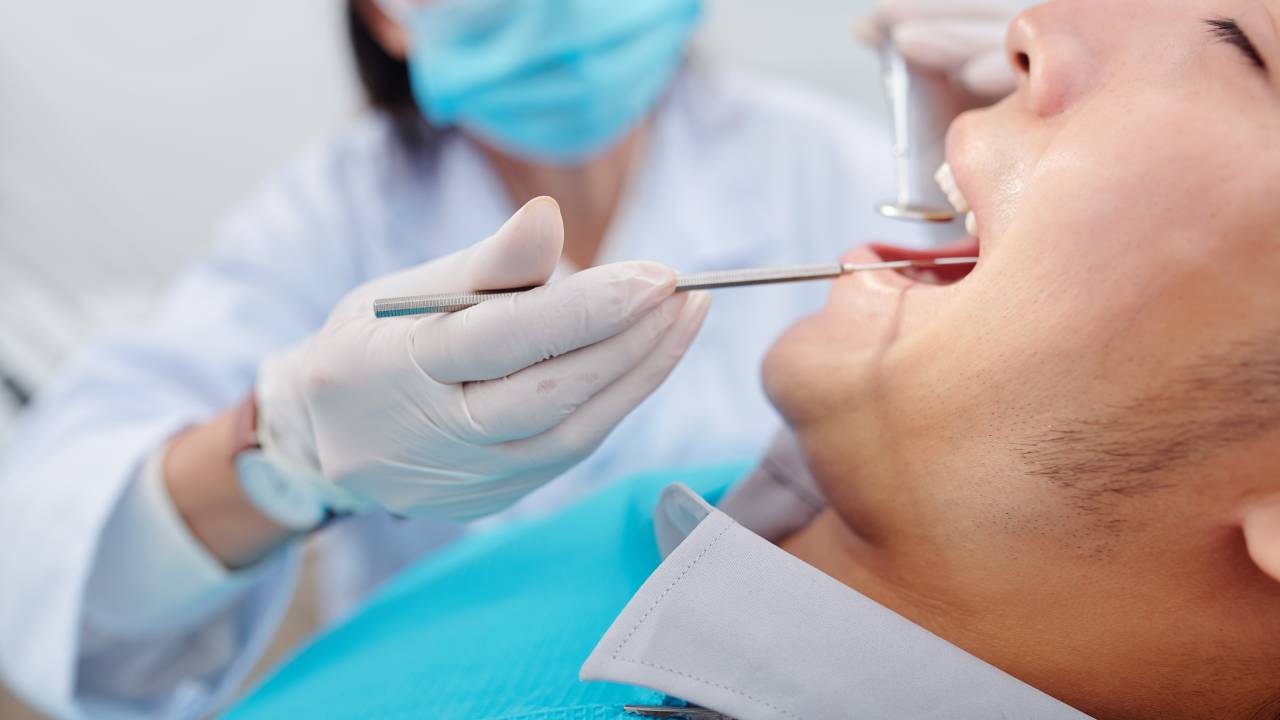
Harvard Health describes the procedure as one done under local anesthesia, with the goal of removing the damaged pulp and sealing the tooth. The steps generally follow this order:
- Diagnosis. The dentist takes X-rays to assess the tooth, its roots, and the surrounding bone.
- Anesthesia. Local anesthesia numbs the area so you are comfortable.
- Access opening. A small opening is made in the top of the tooth to reach the pulp.
- Pulp removal. The infected or inflamed tissue is carefully removed.
- Cleaning and shaping. The canals inside the roots are cleaned, shaped, and disinfected.
- Filling. The cleaned space is filled with a biocompatible material and sealed.
- Restoration. The tooth is restored, usually with a crown, to protect it and bring back normal function.
| Procedure Step | What Happens |
|---|---|
| Diagnosis | X-rays evaluate the tooth and bone |
| Anesthesia | Local anesthesia numbs the area |
| Access opening | An opening is created to reach the pulp |
| Pulp removal | Damaged pulp is taken out |
| Cleaning | The canals are cleaned and shaped |
| Filling | A biocompatible material seals the space |
| Restoration | A crown or other restoration protects the tooth |
Some root canals are finished in one appointment. Others need more than one visit, especially when infection is significant or the tooth has complex root anatomy.
When Is a Post Needed After a Root Canal?
A post is not part of every root canal. It is a decision made tooth by tooth.
After a root canal, the tooth can be weaker than before, particularly if decay or a fracture destroyed much of the crown portion. If too little natural structure remains to hold a crown securely, a dentist may place a post inside one of the cleaned canals. The post helps support a core buildup, and the crown then sits on top of that core.
Factors that influence the recommendation include:
- How much healthy tooth structure remains above the gum line
- Whether the tooth is a front tooth or a back tooth that handles heavy chewing
- The shape and length of the roots
- The type of final restoration being planned
If you are told you may need a post, ask your dentist to show you on the X-ray why one is or is not recommended. A clear explanation helps you understand the plan and the cost before you agree to it.
Is a Root Canal as Painful as People Say?
For many people, the fear of a root canal is worse than the procedure itself. With modern anesthesia, most patients feel pressure rather than sharp pain during treatment, and the procedure is often compared to having a filling. The pain people associate with root canals usually comes from the infection beforehand, which the treatment is meant to relieve.
For patients who feel anxious about dental work, Reimels Dentistry offers sedation dentistry. If nerves have kept you from getting a painful tooth looked at, it is worth asking whether sedation is a reasonable option for your visit.
Are Root Canals Safe, or Is the Online Warning True?
You may have seen videos or posts claiming root canals cause illness elsewhere in the body. Researchers have studied how these claims spread. A study published in PubMed Central examined how root canal conspiracy content circulates on digital platforms, looking at the visual and persuasive techniques that make these messages feel convincing.
The UCSF School of Dentistry has also addressed this issue directly, describing root canal misinformation as a problem that can lead patients to avoid treatment they need. Avoiding a root canal on an infected tooth does not make the infection disappear. It can mean more pain, a spreading infection, and eventually losing the tooth.
If something you read online worries you, bring it to your appointment. A good dentist will listen, explain the evidence, and answer your questions without dismissing you.
How Should You Care for Your Tooth After a Root Canal?
Recovery is usually straightforward, though care during the first days and weeks matters. Harvard Health notes that some tenderness after treatment is common and usually fades.
Key aftercare steps:
- Avoid chewing on the treated tooth until the permanent crown or restoration is placed. A tooth with only a temporary filling can crack under pressure.
- Keep brushing and flossing normally, being gentle around the treated area.
- Watch your symptoms. Mild soreness should be manageable and should improve. Pain that persists or worsens, swelling, or a fever may mean the infection has not resolved, and you should contact the office.
- Return for the final restoration on schedule. Delaying the crown leaves the tooth vulnerable.
Most root canal treatments are successful and can last many years, often for life, when the tooth is properly restored and you keep up with regular checkups.
How Long Does a Root Canal Last Compared With Other Options?
Saving a natural tooth with a root canal is often preferred because it keeps your own root in the jawbone. When a tooth cannot be saved, other options exist. Reimels Dentistry offers tooth extraction, single dental implants, implant supported bridges, zirconia fixed bridges, and full and partial dentures.
| Option | Main Benefit | Consideration |
|---|---|---|
| Root canal with crown | Keeps the natural tooth | Depends on enough healthy structure remaining |
| Extraction and implant | Replaces the tooth with a fixed option | Requires surgery and healing time |
| Extraction and bridge | Fills the gap using neighboring teeth | Involves preparing adjacent teeth |
| Extraction and denture | Removable replacement | Less stable than fixed options |
Your dentist can review the condition of the tooth and walk you through which options make sense. The goal is a decision you understand, not a sales pitch.
How Do Americo and Delta Dental Members Use Out-of-Network Benefits Here?
This is the question most readers arrive with, so here it is directly.
Reimels Dentistry is out-of-network with Americo and out-of-network with Delta Dental. Members of either carrier can still choose to be treated here and can apply whatever out-of-network benefits their plan includes toward a root canal, post, or crown.
Here is how that typically works in practice:
- Check your plan first. Call the member services number on your insurance card or log in to your plan’s website. Ask whether your plan includes out-of-network benefits and how it handles root canals, posts, and crowns.
- Ask about waiting periods and frequency limits. Some plans restrict when major work can be covered after enrollment.
- Ask how reimbursement is calculated. Plans differ in how they determine what they pay an out-of-network office.
- Request a pre-treatment estimate if your plan offers one. This gives you a written idea of what your plan expects to pay before the work begins.
Reimels Dentistry cannot promise what any Americo or Delta Dental plan will reimburse. Only your plan can tell you that, and the answer varies from one plan to the next. Asking these questions before treatment helps you avoid surprises afterward.
What If You Have Blue Cross Blue Shield Instead?
Reimels Dentistry is in-network with Blue Cross Blue Shield GRID+. If you carry that plan, in-network terms apply. If you have a different Blue Cross Blue Shield product, check with your plan to confirm how it is treated.
What Payment Options Are Available Without Full Coverage?
Whether you have out-of-network benefits, limited coverage, or no dental insurance at all, there are other ways to manage the cost of a root canal and restoration. Reimels Dentistry offers these on the record:
- Self-pay
- Cherry
- Sunbit
- CareCredit
- LendingClub
- Proceed Finance
The practice also offers an in-house dental membership plan as an alternative to traditional insurance. Ask the front desk how it works and whether it fits your situation.
Each financing company sets its own terms and approval process. Review those terms carefully with the lender before you commit.
How Do You Choose the Right Dentist for a Root Canal?
Beyond insurance, the quality of care is what protects your tooth over the long run. When you compare dental offices, consider:
- Clear explanations. Does the dentist show you the X-ray and explain why the tooth needs treatment?
- Comfort options. Is sedation available if you feel anxious?
- Restorative follow-through. Can the same office place your crown and, if needed, a post, so your care stays coordinated?
- A full range of alternatives. If the tooth cannot be saved, does the office offer extraction and replacement options so you can compare choices?
- Respect for your questions. Does the team take time to address concerns, including things you read online?
Reimels Dentistry offers root canals, crowns and restorative care, extractions, implants, bridges, dentures, and sedation dentistry under one roof in Huntersville, serving patients from Huntersville, Charlotte, and Cornelius. Keeping the root canal, the restoration, and any future care in one place can make treatment simpler to plan.
What Are Your Next Steps?
If you have tooth pain, swelling, or a dentist has already told you a root canal may be needed, the practical path looks like this:
- Get the tooth evaluated. An exam and X-rays confirm whether a root canal is the right treatment and whether a post is likely.
- Contact your plan. Americo and Delta Dental members should ask about out-of-network benefits for root canals, posts, and crowns.
- Review the treatment plan. Ask for an explanation of each step and the expected cost.
- Choose a payment approach. Combine any out-of-network benefits with self-pay or one of the financing options if needed.
- Complete the restoration. Return for the crown on schedule so the treated tooth stays protected.
Learn more about root canal treatment and out-of-network benefits at Reimels Dentistry, and talk with the team about your plan, your tooth, and the options that fit you.