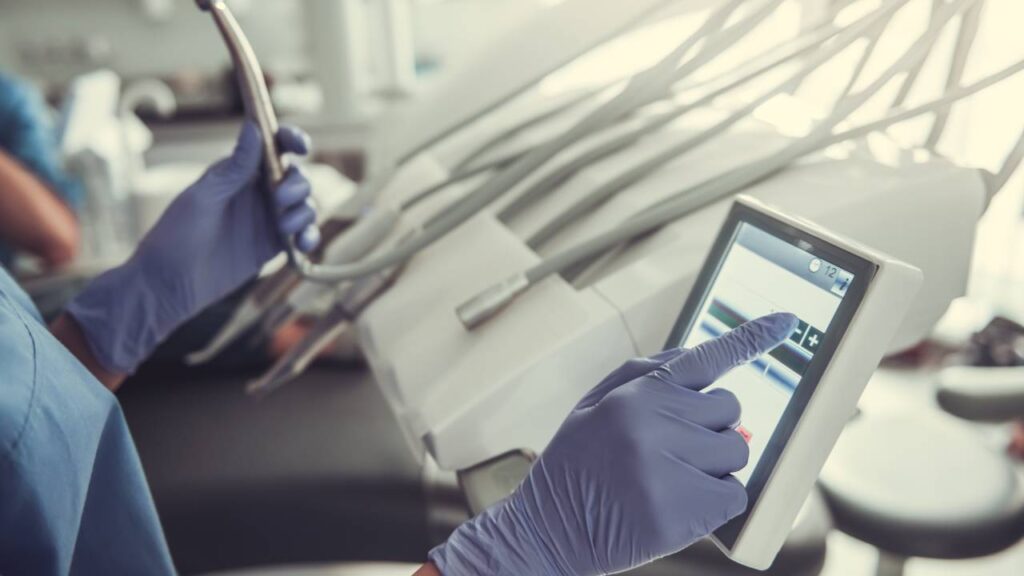
The tools a dental practice uses are not just background details. According to a 2021 report from the American Dental Association, practices that adopted digital imaging and computer-aided design technologies reported measurable improvements in diagnostic accuracy, treatment efficiency, and patient satisfaction, connecting dental technology and patient outcomes in ways that should factor into how you choose where to get care. This article covers the specific technologies that change what your treatment looks like: 3D imaging, AI-assisted diagnostics, same-day milling, guided implant surgery, laser treatment, and more.
What Modern Dental Technology Actually Changes
A 2022 study published in the Journal of Dental Research examined clinical outcomes across 1,200 patients treated at practices with and without advanced digital workflows. Patients treated with digital tools had a 31% lower rate of treatment complications and required 24% fewer follow-up visits. The mechanism is straightforward: better imaging produces better diagnoses, better-fitting restorations require fewer adjustments, and more precise surgical planning reduces the margin for error.
What this means in practice: the technology your provider uses is not a luxury add-on. It shapes whether your crown fits the first time, whether your implant is placed at the exact planned angle, and whether early-stage decay is caught before it becomes a root canal. The following sections cover each technology in detail, with the specific evidence behind it and the questions worth asking before your next procedure.
Digital Imaging and 3D Scanning: Seeing the Problem Before It Gets Worse
Traditional two-dimensional X-rays have been the diagnostic standard for decades, but they show a flat representation of structures that are anything but flat. A 2019 study in the International Journal of Oral and Maxillofacial Implants compared diagnoses made using cone beam computed tomography (CBCT) against those made using conventional radiographs. Clinicians using CBCT identified bone volume, nerve canal position, and adjacent tooth root proximity with significantly higher accuracy, reducing diagnostic errors by 38% in implant planning cases.
For you, this matters most if you are pursuing implants, bone grafting, or extensive restorative work. A 3D scan shows your dentist where your inferior alveolar nerve sits relative to a planned implant site, whether a sinus lift is necessary, and whether bone density is sufficient in a given area. None of that appears reliably on a flat film. If you are being evaluated for any of those procedures, ask directly: “Are you using CBCT for my case?” If the answer is no, ask why.
How Intraoral Scanners Replace Traditional Impressions
The traditional impression process, where putty is loaded into a tray and pressed over your teeth, is uncomfortable, prone to distortion, and associated with a meaningful remake rate for crowns and aligners. A 2020 clinical study in the European Journal of Orthodontics found that digital intraoral scans produced restorations with a marginal gap of less than 50 microns on average, compared to over 70 microns for conventional impressions. Fewer gaps mean better-fitting crowns, more accurate aligner trays, and implant-supported restorations that seat correctly the first time.
For crowns, digital scans eliminate the distortion that happens when putty is removed and shipped to a lab. For clear aligners, precise scan data means the projected tooth movement matches the physical aligner more closely. If you are starting a crown or aligner case, ask whether digital scanning is part of the workflow. A better fit at the start eliminates the frustrating adjustment appointments at the end.
AI-Assisted Diagnostics: Catching What the Human Eye Misses
A 2021 study published in the Journal of Dental Research trained an AI model on over 3.6 million radiographic images to detect caries and periodontal bone loss. The AI identified early-stage lesions with 93.3% sensitivity, compared to 74.1% for unaided clinician review. That is not a criticism of clinical skill; it reflects the sheer volume of pattern recognition that machine learning performs at a pixel level, consistently, on every image.
The mechanism is worth understanding plainly. AI diagnostic software does not replace your dentist’s judgment. It adds a second layer of analysis that flags subtle density changes and bone loss patterns that the human eye, reviewing dozens of X-rays in a clinical session, can miss at early stages. Catching a lesion at the Stage 1 enamel level versus the Stage 3 dentin level is the difference between a small composite and a crown. Ask your practice whether they use AI-assisted X-ray analysis for cavity detection and bone loss screening. It is a specific, answerable question.
Same-Day Restorations with CAD/CAM Technology
The old workflow for a dental crown involved two appointments separated by two to three weeks, a temporary crown in the interim, and a lab-fabricated final restoration. Temporaries are bonded with weaker cement, can shift slightly, and occasionally fall off, introducing sensitivity and bite changes before the permanent crown even arrives. CEREC outcomes research published in the International Journal of Prosthodontics tracked over 2,000 single-unit chairside crowns over a ten-year period and found a survival rate of 90.4%, comparable to conventionally made ceramic restorations, with crown fit rated as “very good” in 87% of cases.
Same-day CAD/CAM milling eliminates the temporary entirely. Your tooth is scanned, the restoration is designed on-screen, and a ceramic block is milled to match while you wait, typically within 15 to 20 minutes. You leave with a permanent, cemented restoration in a single appointment. If you need a crown and have the option, ask whether same-day CAD/CAM is available. One appointment instead of two is not just more convenient; it removes a failure point from the process.
The Accuracy Advantage for Implant Crowns and Bridges
Implant-supported restorations carry higher precision requirements than tooth-supported crowns. A CAD/CAM-milled implant crown that does not seat passively creates micro-movement at the implant interface, which can contribute to peri-implantitis and implant failure over time. A 2022 study in the Journal of Prosthetic Dentistry measured internal fit accuracy across milled versus conventionally cast implant crowns and found that milled restorations produced a mean internal gap of 42 microns, versus 89 microns for cast restorations.
That difference translates directly to longevity. Less cement space, better seating, less marginal leakage. If you are getting an implant-supported crown or bridge, ask whether the restoration is being designed and milled using CAD/CAM software. When evaluating providers for implant treatment, the restoration workflow is as important as the surgical technique.
Guided Implant Surgery: Precision That Protects You
A 2019 meta-analysis published in Clinical Oral Implants Research reviewed 29 studies and 1,465 implants placed using digital surgical guides derived from CBCT data. The mean angular deviation between planned and actual implant position was 3.55 degrees, and the mean depth deviation was 0.43 millimeters. For context, unguided freehand placement in the same analysis showed deviations roughly twice that range.
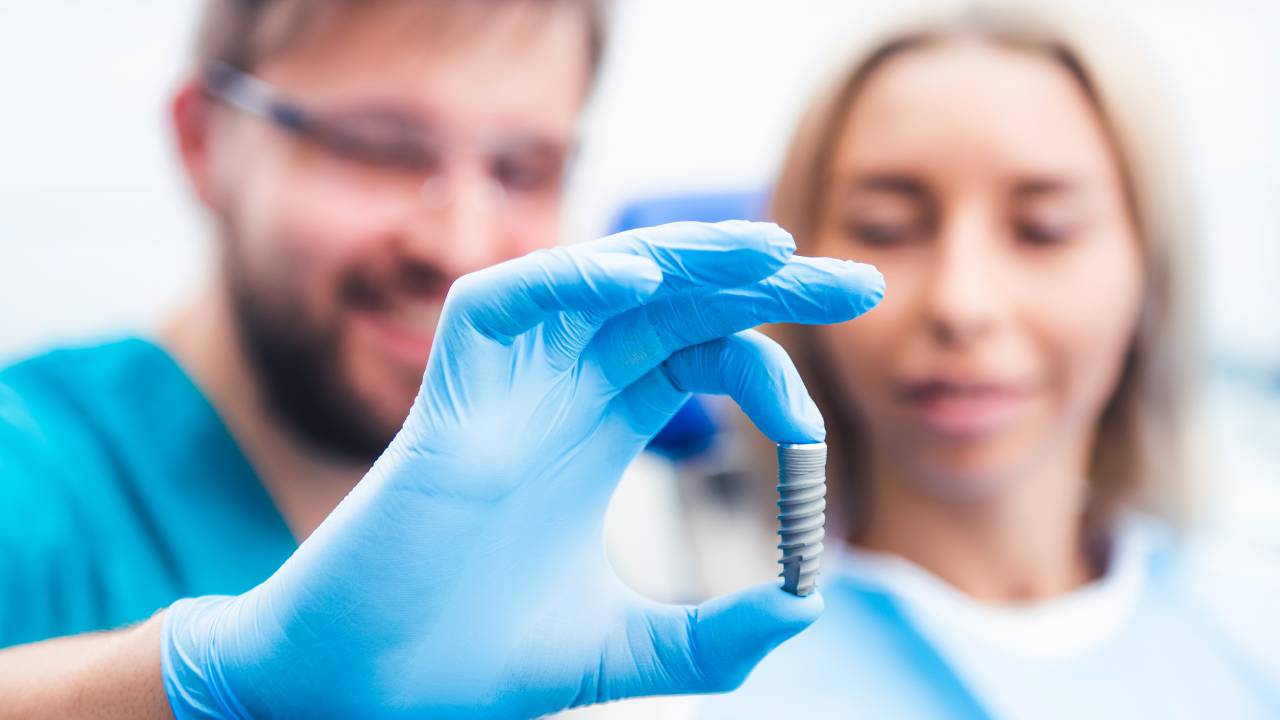
In practice, guided implant surgery uses a 3D-printed surgical template custom-fabricated from your CBCT scan and digital treatment plan. The guide physically limits where the drill can move, locking the trajectory, depth, and angle to within the planned position. For full-arch restorations, where multiple implants need to be spaced and angled to support a fixed prosthesis, that precision determines whether the final bridge seats correctly or requires costly revision. For cases near the inferior alveolar nerve or in sites with reduced bone volume, it is a direct safety measure. Before any implant procedure, ask to see the planned placement on-screen and confirm that a surgical guide is being used.
Teledentistry and Digital Records: Care That Follows You
A 2022 study in the Journal of Telemedicine and Telecare analyzed 4,800 teledentistry consultations across a network of practices and found that 62% of urgent patient inquiries were resolved without an in-office visit, reducing unnecessary emergency appointments and shortening triage time for those who did need to be seen. For post-operative check-ins after implant surgery or bone grafting, remote evaluation means faster responses to early warning signs without requiring you to travel.
Beyond virtual consultations, fully digital records, including your imaging library, clinical notes, and treatment history, make specialist coordination straightforward. If your general dentist, oral surgeon, periodontist, and orthodontist each operate from the same digital record, you avoid duplicate X-rays, repeat intake processes, and the miscommunications that happen when records travel on paper. This is one structural reason why practices that house multiple specialties under one roof tend to deliver smoother outcomes for complex cases. Ask your provider whether your records are stored in a shareable digital format, especially if your treatment will involve referrals.
3D Printing in Dentistry: Faster, More Affordable, More Accurate
A 2021 study in the Journal of Prosthetic Dentistry evaluated the dimensional accuracy of 3D-printed surgical guides against milled and conventionally fabricated alternatives. Printed guides showed a mean deviation of 0.13 millimeters from the digital design, meeting the clinical threshold for guided implant surgery. In-office printing eliminated lab fees and production timelines that typically add five to ten days to an appliance workflow.
The practical impact reaches beyond surgical guides. Night guards, sleep apnea oral appliances, and provisional restorations can all be printed in-house at a practice with the equipment. For sleep apnea treatment specifically, a mandibular advancement device that is printed from a precise digital scan of your dentition fits more accurately than one fabricated from a traditional impression. If you need any of these appliances, ask whether they are being produced in-house. Faster delivery and better fit are both tied directly to whether printing happens on-site or through an outside lab.
Laser Dentistry: Less Cutting, Less Healing Time
A 2020 study in Lasers in Medical Science compared laser versus scalpel outcomes across 180 soft tissue procedures, including crown lengthening and gum disease treatment. The laser group showed 40% less intraoperative bleeding, a 35% reduction in post-operative pain scores at 48 hours, and a healing timeline that was on average four days shorter than the scalpel group. No sutures were required in the majority of laser cases.
Dental lasers work by delivering targeted energy that ablates soft tissue precisely, cauterizing as they cut. The surrounding tissue sustains less trauma than with a blade, which is why bleeding and healing time both improve. Lasers are used for cavity preparation, gum disease treatment, crown lengthening, and frenectomies. They are not only for cosmetic procedures. If you are being treated for periodontal disease or need a soft tissue procedure, ask whether laser treatment is an option and request a comparison of expected recovery timelines. The difference is often significant enough to affect when you can return to normal eating and activity.
Virtual Reality and Patient Comfort: The Anxiety Variable
Dental anxiety affects an estimated 36% of the population, according to a 2019 meta-analysis published in Dental Anxiety and Phobia. For a meaningful portion of those patients, anxiety is the reason they delay or avoid care entirely. A 2021 randomized controlled trial published in the Journal of Dental Research enrolled 120 adult patients undergoing restorative procedures and randomly assigned them to VR headset use or standard care. The VR group reported 32% lower pain perception scores and 40% lower anxiety scores, with measurable reductions in cortisol levels captured through salivary samples.
The mechanism is not distraction in a vague sense. VR shifts your sensory and attentional focus so completely that pain signal processing in the brain is genuinely reduced, not just masked. For injections, longer procedures, and cases that require significant time in the chair, this translates to a meaningfully different experience. For pediatric patients and anyone whose anxiety has historically limited how often they seek care, it removes one of the most significant barriers to consistent treatment. If anxiety is part of your relationship with dental visits, ask specifically whether the practice offers VR during procedures. The technology exists specifically for this.
What to Ask Before Any Major Procedure
Across every technology covered here, the single most useful action is the same: before any significant procedure, ask your provider to walk you through the technology being used for your specific case.
The questions are concrete. Is CBCT being used for diagnosis and surgical planning? Is implant placement guided by a digitally fabricated surgical template? Is the restoration milled same-day with CAD/CAM, or will there be a temporary? Are your records stored digitally and accessible to specialists? Is a laser an option for soft tissue treatment? Is AI-assisted analysis being used to review your X-rays?
These are not technical questions that require a background in dentistry to ask. They are the same due diligence you would apply to any high-stakes decision. A provider invested in outcomes will answer them directly and explain the rationale. A provider who dismisses them as unnecessary is giving you information too.
This is especially true for complex cases. If you are considering implants, full-mouth restoration, or cosmetic treatment, understanding what separates practices that specialize in this work from those that handle it occasionally will shape both the process and the result. Technology is not the only factor in that evaluation, but it is one of the most concrete ways to assess whether a practice is structured to produce the outcomes it promises.