How to select a Delta Dental root canal dentist like Reimels Dentistry in Huntersville, NC: what the network means, how out-of-network benefits work, what root canal treatment involves, and the questions to ask any provider.
Selecting a Delta Dental root canal dentist comes down to two decisions. The first is clinical: you want a provider who can diagnose the tooth accurately, complete the treatment carefully, and restore it so it lasts. The second is financial: you want to understand how your Delta Dental plan pays for root canal therapy depending on whether the dentist you choose is in its network. This guide covers both so you can make the choice with clear expectations.
One point up front: Reimels Dentistry is out-of-network with Delta Dental. The practice is in-network with Blue Cross Blue Shield (BCBS GRID+) only. Delta Dental members can still be seen here and can use their out-of-network benefits toward root canal treatment, according to what their own plan reimburses. More on how that works is below.
What Does It Mean to Choose a Delta Dental Root Canal Dentist?
When people search for a Delta Dental root canal dentist, they usually mean one of two things. Some want a dentist who is in the Delta Dental network, because in-network providers have agreed to the carrier’s fee arrangements. Others simply want a dentist who will work with their Delta Dental plan, including out-of-network benefits, so the insurance still contributes toward treatment.
Both are reasonable goals. The difference matters because dental plans generally treat in-network and out-of-network care differently. How much your plan pays, and how much you pay, depends on your specific policy. The only reliable way to know is to read your plan documents or contact Delta Dental directly with the procedure your dentist recommends.
Why Network Status Is Only Part of the Decision
Network status tells you how your plan will process a claim. It does not tell you how a dentist approaches diagnosis, how they manage comfort, whether they can place crowns after treatment in the same office, or how quickly they can see you when a tooth is hurting. Those factors often shape your experience more than the claim form does.
How Do Delta Dental Plan Types Affect Your Choice?
Delta Dental offers different plan structures, and the structure you have determines how much flexibility you have in choosing a provider.
Plans That Allow Out-of-Network Care
Many Delta Dental plans allow members to see any licensed dentist. When you choose a dentist outside the network, the plan may still pay a portion of covered services according to its own terms. You may be responsible for a larger share of the cost than you would be in-network, and you may need to pay the office directly and wait for reimbursement, depending on how the plan and the office handle claims. Your plan documents explain these details.
Managed Care Plans Such as DeltaCare USA
DeltaCare USA operates as a Dental Health Maintenance Organization (DHMO). Members typically select a primary care dentist within that network who manages their overall dental care and refers them to specialists when needed. This coordinated model can work well for people who want a single point of contact, but it usually limits benefits to dentists inside the DHMO network.
If you have a DeltaCare USA plan, check your plan terms carefully before scheduling root canal treatment with any dentist outside that network. Managed care plans often provide little or no benefit for out-of-network care. This is the most important thing to confirm before you choose a provider.
How Can Delta Dental Members Use Out-of-Network Benefits at Reimels Dentistry?
Because Reimels Dentistry is out-of-network with Delta Dental, the practice does not have a network agreement with the carrier. Here is how members typically approach care here:
- Check your plan type. Confirm whether your Delta Dental plan includes out-of-network benefits at all. A DHMO plan may not.
- Ask Delta Dental what it reimburses. Contact the carrier with the procedure your dentist recommends and ask how out-of-network root canal therapy and any follow-up restoration, such as crowns, are covered under your policy.
- Request a treatment plan. A written treatment plan from the office gives you the procedures you need so you can compare them against your benefits.
- Understand your share. Out-of-network care may mean you pay more of the total. The practice cannot promise what your plan will pay, and no one can guarantee coverage before the carrier processes the claim.
Self-Pay and Financing Options
Patients who prefer not to use insurance, or who want help with the portion their plan does not reimburse, can choose self-pay. Financing is available at Reimels Dentistry through Cherry, Sunbit, CareCredit, LendingClub, and Proceed Finance. Each has its own application and terms, so review them before deciding.
Note that Reimels Dentistry does not accept Medicaid or Medicare.
What Questions Should You Ask When Selecting a Root Canal Dentist?
Whether you stay in-network or use out-of-network benefits, these questions help you compare providers:
- Do you perform root canals in your office, or will I be referred elsewhere? Some general dentists refer most root canals to an endodontist. Others treat many cases themselves and refer only complex ones.
- Can you restore the tooth afterward? Most treated back teeth need a crown. Having the restoration handled in the same office can mean fewer handoffs.
- How do you manage comfort and anxiety? Ask about local anesthesia and whether sedation options are available.
- Can you see me quickly if the tooth is painful? An infected tooth is not something to wait on for weeks.
- What will you submit to my insurance, and what will I owe at the visit? Clear answers here prevent surprises.
What Reimels Dentistry Brings to Root Canal Care
Reimels Dentistry provides root canals along with crowns, tooth extraction, dental implants, and emergency dentistry in one Huntersville location, which means many patients can complete diagnosis, treatment, and restoration without being sent to multiple offices. The team includes multiple Fellows of the Academy of General Dentistry, a distinction tied to extensive continuing education. Sedation dentistry is available for patients who feel anxious, and same-day emergency appointments are available when a tooth needs prompt attention. The Reimels Dentistry practice serves patients from Huntersville, Charlotte, and Cornelius.
When Might You Need an Endodontist Instead?
Not every root canal is routine. Teeth with curved or calcified canals, previous root canal treatment that has failed, or unusual anatomy may be better handled by an endodontist, a dentist who has completed additional specialty training focused on the inside of the tooth. A careful general dentist will tell you when a case is outside what they recommend treating in their own office.
If your dentist recommends an endodontist, ask for the reason, confirm whether that specialist is in your Delta Dental network, and ask how the tooth will be restored afterward. Your general dentist often places the final crown once the specialist completes treatment.
What Affects the Cost of a Root Canal?
Root canal costs vary, and it is not possible to give a meaningful number without examining the tooth. The main factors include:
- Type of tooth. Molars have more canals than front teeth and generally take longer to treat.
- Complexity. Calcified canals, infection that has spread, or retreatment of an earlier root canal add time and steps.
- The final restoration. The root canal itself usually does not include the filling or crown that seals and protects the tooth afterward. Plan for that as a separate procedure.
- Your insurance arrangement. Whether the dentist is in-network or out-of-network with your plan changes how the claim is processed and what portion is covered.
Delta Dental offers online tools that let members check eligibility, claim status, and cost estimates for their own plan. Using those tools alongside a written treatment plan is the clearest way to estimate your share.
What Happens During Root Canal Treatment?
Root canal treatment relieves pain from an infected or inflamed tooth and preserves the natural tooth rather than removing it. The American Dental Association’s consumer site offers plain-language background on the procedure. The typical steps are:
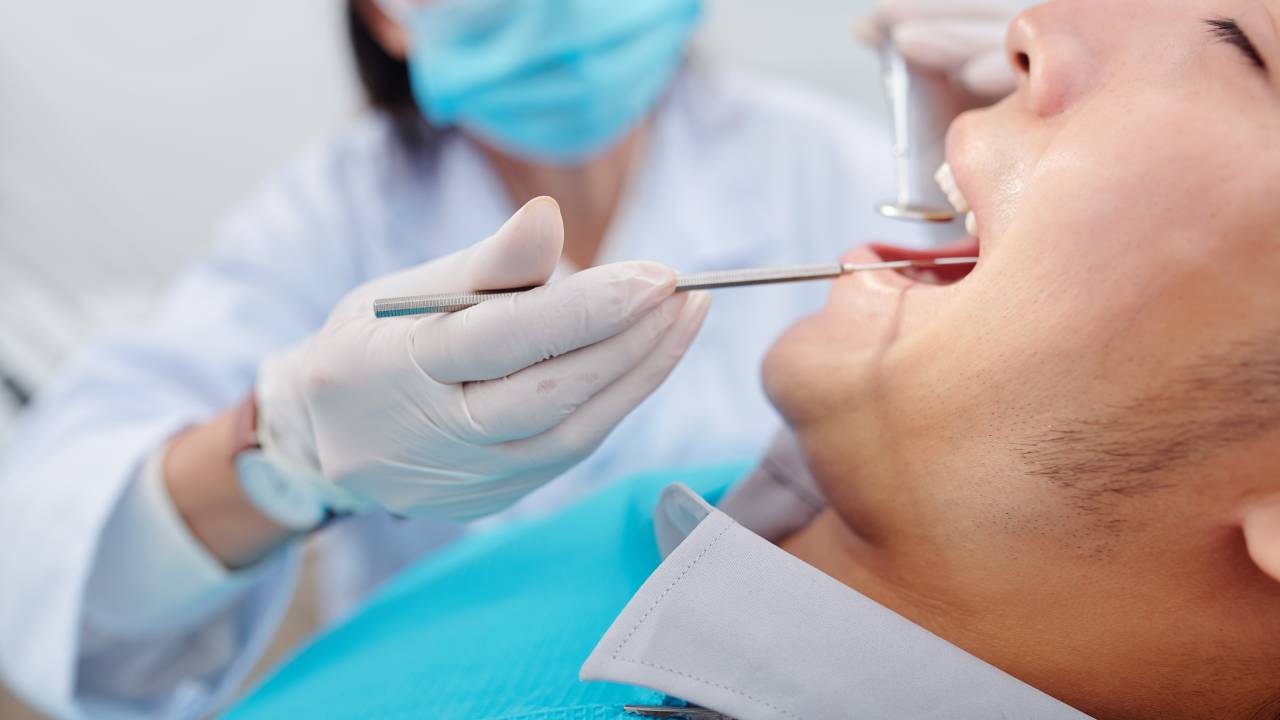
- Diagnosis and X-rays. Your dentist examines the tooth and takes radiographs to see the roots and surrounding bone.
- Anesthesia. Local anesthesia numbs the area so you are comfortable.
- Pulp removal. The infected or damaged pulp is removed from inside the tooth.
- Cleaning and disinfecting. The canals are shaped, cleaned, and disinfected to remove bacteria.
- Filling the canals. The cleaned canals are filled with a biocompatible material that seals the space.
- Restoration. A filling or crown is placed to protect the tooth and restore normal chewing.
| Step | What Happens |
|---|---|
| Diagnosis | X-rays identify the problem |
| Anesthesia | The tooth is numbed for comfort |
| Pulp removal | Infected pulp is taken out |
| Cleaning | Canals are cleaned and disinfected |
| Filling | Canals are sealed |
| Restoration | A filling or crown protects the tooth |
Treatment may take one appointment or more, depending on the tooth and how severe the infection is. Mild soreness for a few days afterward is common and usually manageable.
Are Root Canals Safe?
Some people hesitate because of claims online that root canals cause illness elsewhere in the body. The American Association of Endodontists addresses this directly in its root canal safety fact sheet, which states that root canal treatment is a safe, effective way to save a natural tooth and that valid research does not link it to disease elsewhere in the body. Researchers have also studied how these myths spread on social media; a published analysis of root canal conspiracy content examines how such claims circulate. If you have concerns, bring them to your dentist and ask for a direct explanation.
Why Save the Natural Tooth?
Preserving Function and Appearance
Keeping your natural tooth helps maintain your bite, chewing ability, and the look of your smile. A missing tooth can allow neighboring teeth to shift over time, which may affect alignment and chewing.
Stopping the Infection
Removing the infected pulp and disinfecting the canals stops bacteria inside the tooth from continuing to cause damage. Left untreated, an infected tooth can lead to problems in the surrounding bone and soft tissues. Treating it relieves pain and protects nearby structures.
Weighing Root Canal Against Extraction
Extraction may seem simpler in the moment, but replacing a missing tooth with an implant or bridge adds more treatment later. For many patients, saving the tooth with a root canal and a crown is the more conservative path. Reimels Dentistry also provides extractions and dental implants, so if a tooth cannot be saved, those options can be discussed in the same office.
| Consideration | Root Canal | Extraction |
|---|---|---|
| Natural tooth | Kept | Removed |
| Follow-up | Usually a crown | Often an implant or bridge to replace the tooth |
| Effect on nearby teeth | Spacing maintained | Teeth may shift if the gap is not replaced |
How Can Preventive Care Reduce the Need for Root Canals?
Many root canals start as decay or cracks that went unnoticed. Routine preventive visits, including exams, cleanings, and X-rays when appropriate, give your dentist the chance to find problems while a simple filling can still fix them. Public health information on oral health from the Centers for Disease Control and Prevention and research summaries from the National Institute of Dental and Craniofacial Research explain how decay develops and how it can be prevented. Most dental plans place a high priority on preventive services, so check what your plan provides for exams and cleanings.
Daily brushing with fluoride toothpaste, cleaning between teeth, limiting frequent sugary snacks and drinks, and wearing a night guard if you grind your teeth all lower the risk of the deep decay and fractures that lead to root canals.
What Should You Do Next?
Bring your Delta Dental plan information to Reimels Dentistry so you can check your out-of-network benefits against the treatment plan. Ask Delta Dental what your plan reimburses for root canal therapy and crowns before treatment begins, and consider self-pay or financing through Cherry, Sunbit, CareCredit, LendingClub, or Proceed Finance for any portion your plan does not cover.
At Reimels Dentistry, the next step after a root canal is restoring and protecting the tooth, typically with a crown, followed by regular preventive visits to keep it healthy. If evidence-based treatment guidance interests you, the ADA’s clinical practice guidelines and evidence resources describe how dental recommendations are developed. Choosing a root canal dentist with clear information about both the care and the costs puts you in the best position to save your tooth.