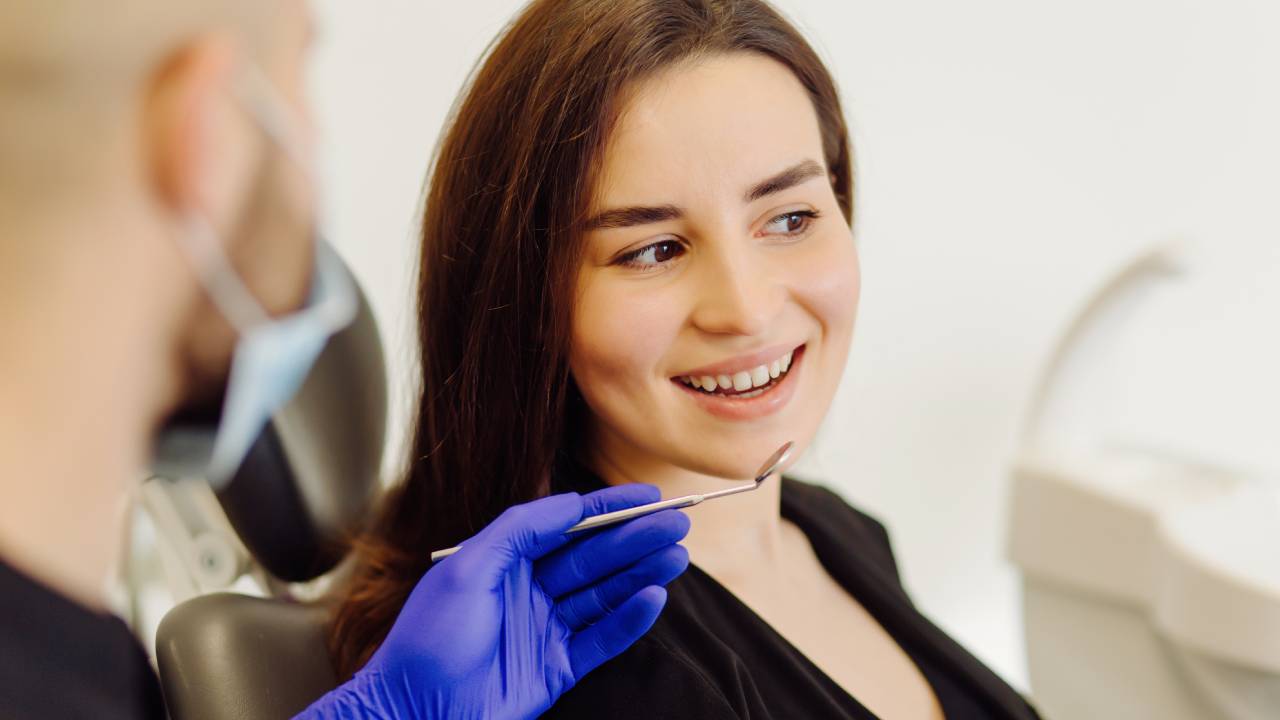
Most adults assume dental care means bouncing between a general dentist, an orthodontist, a periodontist, and an oral surgeon, scheduling appointments across town and hoping each provider has the full picture. The benefits of a multi-specialty dental practice collapse that fragmented model into something far more practical: one location, one coordinated team, one complete record.
What Is a Multi-Specialty Dental Practice?
A multi-specialty dental practice is a single facility where providers across multiple disciplines , general dentistry, cosmetic work, implants, periodontics, orthodontics, oral surgery, sleep medicine , treat patients under the same roof. Instead of receiving a referral slip and starting over somewhere new, you move between specialties within the same practice and the same care team.
The contrast with the traditional model is significant. According to a 2019 study published in the Journal of Dental Research, patients referred out of a primary dental office for specialty care fail to complete that treatment at rates approaching 30 to 50 percent, depending on the complexity of the procedure and the number of handoffs involved. The referral itself becomes the obstacle.
One Location Handles More of Your Care
The immediate practical advantage is straightforward: fewer offices, fewer intake forms, no scheduling gap between a diagnosis and the next available specialist three weeks away. When the periodontist is down the hall from the dentist who identified the problem, the treatment plan moves forward the same week rather than the same month.
That referral drop-off rate matters here. When completing a specialist appointment requires finding a new practice, registering as a new patient, and rebuilding context from scratch, a meaningful share of patients simply don’t follow through. The convenience of in-house access isn’t just about saving time; it’s about whether treatment actually happens. Before assuming you’ll need an outside referral, ask your dental office directly which procedures and specialties they handle internally. The answer determines how your care actually progresses.
Your Providers Actually Talk to Each Other
Coordination in a fragmented model depends on fax machines, forwarded notes, and the assumption that context survives the transfer. It often doesn’t. A 2020 report from the Agency for Healthcare Research and Quality identified communication failures during care transitions as one of the leading contributors to treatment errors and delays across both medical and dental settings.
In a multi-specialty practice, providers share the same patient record, review the same imaging, and discuss cases in real time. The implant surgeon and the restorative dentist aren’t exchanging summaries; they’re looking at the same file and building a single unified plan. Shared hallways cut the gaps that delay or complicate treatment. When evaluating a practice for anything beyond a routine cleaning, ask directly how specialists coordinate on complex cases , how that coordination works is one of the most telling indicators of the quality of care you’ll receive.
Every Family Member Gets Care in One Place
A multi-specialty practice serves the full range of dental needs across every stage of life. Children need preventive care and early orthodontic monitoring. Teenagers often pursue orthodontic treatment. Adults seek cosmetic enhancements, restorative work, or implants. Older patients frequently require bone grafting, full-arch restoration, or sleep apnea treatment. Managing those needs across separate practices means managing multiple provider relationships, multiple scheduling systems, and multiple patient records.
A 2021 survey by the American Dental Association found that families managing care across three or more dental providers reported significantly higher rates of missed appointments and lapsed treatment compared to those concentrated in one or two practices. One trusted team across every stage of life isn’t just more convenient; it produces better long-term outcomes because continuity doesn’t get interrupted every time a new need arises.
Complex Treatment Gets Done Faster
Full-arch implant restoration, bone grafting prior to implant placement, cosmetic work combined with bite correction: these procedures involve multiple disciplines in a specific sequence. In a fragmented model, each phase waits on a referral and a new appointment. Weeks accumulate between steps, and the overall timeline stretches.
A 2022 analysis in the International Journal of Oral and Maxillofacial Implants found that patients receiving implant-related care within a coordinated, single-site setting completed treatment an average of 40 percent faster than those managed across multiple offices. Fewer external handoffs means fewer delays between each phase of the plan. If a dentist has recommended a multi-step procedure, ask directly whether every phase, from surgical prep through final restoration, can be completed at the same practice. Understanding what to look for in the provider handling that work is equally worth your attention before you commit.
Your Records Stay Complete and Accessible
When all providers in a practice share a unified patient record, nothing gets lost in translation. X-rays, treatment history, specialist notes, medication flags, and prior imaging are all accessible to every provider involved in your care. A 2020 study in the Journal of the American Dental Association found that incomplete record transfers contributed to diagnostic errors or redundant procedures in roughly one in five referral cases.
What this means for you: the implant specialist already knows what the hygienist documented six months ago. The cosmetic consultation starts with your full history rather than a blank intake form. Advanced imaging and digital records accelerate this further, giving every provider the same accurate baseline before treatment begins. Before any new consultation, confirm the practice uses a unified record system across all providers, not a patchwork of separate charts.
The Check That Takes Ten Minutes
Visit the practice website or call and confirm which specialties are available in-house. List the treatments on your radar, whether that’s implants, orthodontics, a child’s first visit, or a cosmetic consult, and check how many can be handled without a referral. That single check determines whether you’re building a coordinated care relationship or assembling a disconnected network of providers one referral at a time.