Tooth Discoloration: What To Do For It And How To Prevent It
You’ve used whitening toothpaste for months. You may have tried drugstore strips too. Your teeth still look dull, yellow, or gray. Now you’re wondering whether your discoloration is the kind that over-the-counter products can’t fix. That’s a reasonable question to bring to Reimels Dentistry. With tooth discoloration, what to do for it and how to prevent it depends on one thing a store-bought kit can’t check: where the color actually comes from.
The emotional side can be just as heavy. Maybe you angle your chin down in photos, laugh with your lips closed, or put off the dentist because you expect to be judged. Plenty of people feel this way. At Reimels Dentistry in Huntersville, NC, a discoloration visit begins with a diagnosis, not a pitch. Once the cause is clear, the path toward treatment is usually simpler and often less costly than people expect.
Why Did Your Teeth Change Color, and Is the Stain on the Surface or Inside?
Discoloration falls into two groups. Extrinsic discoloration is pigment sitting on the outer enamel. Intrinsic discoloration is a change inside the tooth. Surface stain often responds to professional cleaning and bleaching. Internal color usually needs a cosmetic option that covers the affected surface.
Extrinsic stain comes from what your teeth touch every day. Coffee, tea, red wine, dark sodas, and tobacco leave pigments that cling to enamel and darken it over time. Hong Kong’s Department of Health explains in its patient guidance on tooth discoloration that these outside sources are distinct from intrinsic causes that start inside the tooth. This type of stain tends to appear first along the gumline and between teeth, where plaque collects and traps pigment.
Intrinsic discoloration works differently. The MedlinePlus Medical Encyclopedia lists causes of abnormal tooth color, including:
- Tetracycline antibiotics taken before about age 8
- Excess fluoride while teeth are developing
- Trauma that damages the nerve
- Inherited conditions
- Normal aging
In these cases the color sits in the dentin, the layer beneath the enamel, or comes from changes inside the tooth. That’s why peroxide applied to the surface may struggle to reach it.
Picture two patients. One drinks three cups of coffee a day and has watched a yellow-brown cast spread across the front teeth. The other has a single front tooth that turned gray years after a fall, while the teeth around it look fine. Both would say they have “discolored teeth,” but they need very different solutions. The type of discoloration matters far more than anything printed on a product box.
How Does a Fellowship-Trained Dentist Tell Which Type You Have?
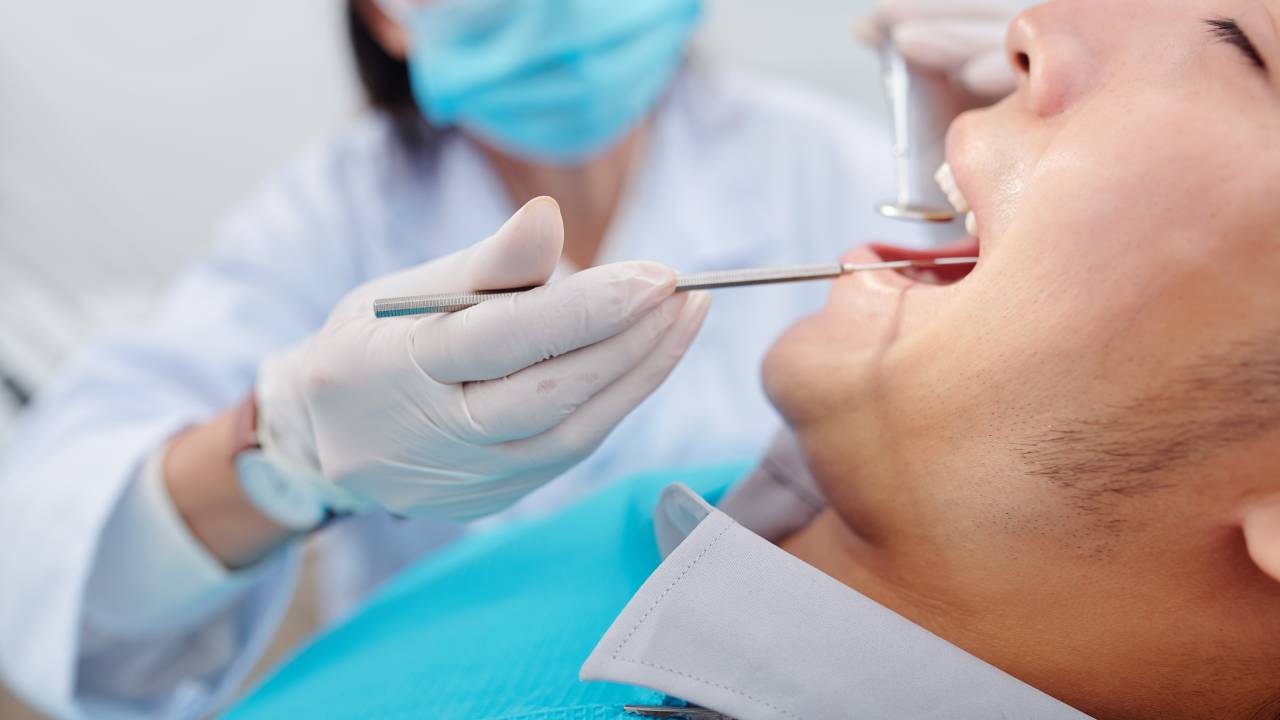
Your dentist identifies the type of discoloration with three tools: a careful visual exam, your dental and medical history, and diagnostic imaging. Reimels Dentistry has more than one Fellow in the Academy of General Dentistry on staff, each with more than 600 hours of continuing education. That depth of training helps them tell surface stain from internal change. It also helps them recognize when a color change is a sign of a health problem rather than a cosmetic one.
Your history narrows things down faster than most people expect. Your dentist will likely ask:
- Did you take antibiotics as a child?
- Was a tooth ever hit or chipped?
- Have you had root canal treatment?
- How old are your fillings?
- What do you drink on a typical day?
Each answer points in a direction. Childhood antibiotics combined with banded gray or brown streaks suggest one cause. Darkness that follows the outline of old silver fillings suggests another.
The intraoral video camera at Reimels Dentistry is a small wand that shows a magnified, full-color image of your tooth on a screen in front of you. For many patients, this is the moment their own smile finally makes sense. You can see whether the stain sits on top of the enamel, whether the edges have worn thin, or whether a dark filling is showing through from behind.
Digital imaging and CBCT scans add information the eye can’t pick up, such as decay under an old restoration or internal changes in a tooth that has lost its nerve. When veneers or a full smile makeover are being considered, iTero scans build a precise 3D model of your teeth for planning at Reimels Dentistry.
This is what the Reimels Dentistry team means by High-Tech Smiles. The goal is to make sure you leave with a treatment recommendation that matches your diagnosis. Reimels Dentistry offers comprehensive dentistry in one location, with no referrals needed and an on-site orthodontist practice. Your dentist can talk through options in one visit instead of steering you toward whatever a single office happens to offer. That’s Patient-Focused Care: diagnose first, then recommend.
Will Professional Whitening Work on Your Teeth, or Is Your Stain the Kind It Can’t Reach?
Once you know your stain type, the next question is whether bleaching may help.
Bleaching often works best on:
- Extrinsic stain
- General yellowing from diet and habits
It’s far less predictable on:
- Tetracycline banding
- A tooth that darkened after a root canal
- Yellow dentin showing through thinning enamel
It also won’t change the color of fillings, crowns, or veneers.
Whitening agents break down pigment molecules in and just below the enamel. When the problem is a film of coffee or tea pigment, that can brighten a smile for some people, though results vary and some people experience temporary sensitivity. Ask what a realistic outcome looks like for teeth like yours before you start.
Deeper color is another story:
- Tetracycline staining forms while teeth are still developing, so the color is built into the tooth.
- A gray tooth after a root canal has changed from the inside out.
- Aging is more gradual. Enamel thins over the years and lets more yellow dentin show through. Strips and trays may lighten the enamel slightly in some cases, but they can’t change the dentin beneath it. This is often why some people say whitening “used to work” and now does less.
Existing dental work complicates things further. If you have a tooth-colored filling on a front tooth and bleach the teeth around it, the filling stays the same shade and may suddenly look darker. For intrinsic color and mismatched dental work, porcelain veneers are often considered because they cover the discolored surface instead of trying to bleach through it. If you suspect your stain is the deep kind, an exam can save you from buying another round of products that may not reach it.
What Fixes the Discoloration Whitening Can’t Touch?
When bleaching can’t reach the color, the appropriate approach depends on the cause and on how many teeth are involved. Porcelain veneers cover deep stain on visible teeth. When several concerns overlap, a full smile makeover brings them together into one coordinated plan.
Porcelain veneers are thin shells bonded to the front of your teeth. Because they become the new visible surface, they can hide tetracycline banding, post-root-canal graying, and dentin yellowing in ways bleaching can’t. Porcelain also reflects light much like natural enamel, which matters if you’re worried about teeth that look fake. Veneers are part of the cosmetic dentistry offered at Reimels Dentistry, and they’re often the centerpiece of a full smile makeover.
For some patients in Huntersville and Charlotte, the discoloration isn’t really coming from the natural teeth. Old silver fillings can make a tooth look gray from the inside, and older restorations often stop matching the teeth beside them. Your dentist at Reimels Dentistry will point out these sources on the intraoral camera screen so you can see what’s driving the color. That way your plan targets the actual cause, which often means a more conservative approach than treating every tooth.
Order matters when treatments are combined. If bleaching is part of your plan, it typically comes first. Any porcelain is then matched to your new shade, because porcelain won’t change color afterward. Getting this sequence wrong is one of the common reasons people end up with a front tooth that doesn’t quite match.
If the idea of dental work makes your stomach tighten, especially after years of putting it off, you’re not alone and you don’t owe anyone an apology. Reimels Dentistry offers sedation dentistry so longer cosmetic visits can be done in comfort. The team pairs advanced skills with a small-town touch, so you’re treated like a member of our family rather than a chart number.
Tooth Discoloration After Treatment: What to Do for It and How to Prevent It Coming Back
After treatment, the job becomes protecting your results. Preventing new discoloration mostly means adjusting the habits that caused it:
- Rinse with water after coffee or tea.
- Use a straw for dark or acidic drinks.
- Stop using tobacco.
- Keep up with regular exams and cleanings so surface buildup is removed before it settles into enamel.
Coffee and tea are common daily stain sources for many adults, and you don’t have to give them up. A quick swish of water afterward rinses away much of the pigment before it can cling. A straw keeps iced coffee, soda, and dark juices off your front teeth. After anything acidic, wait about 30 minutes before brushing, because brushing softened enamel can wear it down and make future staining easier.
Tobacco needs its own mention because the damage goes well beyond stain. The CDC’s oral health guidance identifies tobacco use as a major risk factor for gum disease and tooth loss. Quitting protects both your cosmetic results and your long-term oral health.
Your dental work needs attention too. Porcelain veneers resist stain well, but the edges where they meet natural teeth can still collect buildup. Tooth-colored filling materials are more porous than porcelain and can pick up stain over the years, especially in people who drink a lot of coffee. Routine exams and cleanings at Reimels Dentistry clear that buildup and give your dentist a chance to catch early color changes, such as a tooth beginning to darken, while they’re still manageable. If a tooth darkens suddenly after an injury, same-day emergency appointments are available so it can be checked quickly.
What Does Tooth Discoloration Treatment Cost in Huntersville, and How Do You Pay for It?
Cost depends on the cause, the treatment, and how many teeth are involved. One dark front tooth leads to a very different total than veneers across the whole smile. At Reimels Dentistry, your quote comes after your exam and imaging, so it reflects your actual case instead of a guess.
Insurance is a common worry, so here’s the straightforward version. Dental plans usually classify purely cosmetic work, such as bleaching and veneers, as elective. That often means limited or no benefit. Work that’s also needed for health reasons may be treated differently. Coverage varies widely by plan, so check your benefits and ask the Reimels Dentistry team to walk you through what your plan may cover before you commit.
For the portion insurance doesn’t cover, Reimels Dentistry works with several patient financing partners:
- Cherry
- Sunbit
- CareCredit
- LendingClub
- Proceed Finance
The office also works with BCBS GRID+.
Months of strips, trays, and specialty toothpastes add up, and none of them can reach intrinsic stain. Financing lets you choose the treatment that matches your diagnosis instead of the one that fits this month’s budget. The Reimels Dentistry team can explain monthly payment options during your consultation.
Questions Huntersville Patients Ask About Discolored Teeth
Can whitening toothpaste remove deep tooth discoloration?
No. Whitening toothpaste polishes away surface stain. It can’t get through enamel to change intrinsic color caused by medication, trauma, or aging.
How do I know if my discoloration is extrinsic or intrinsic?
A dentist determines that with a visual exam, your history, and imaging. At Reimels Dentistry, Fellows of the Academy of General Dentistry use intraoral video cameras and digital imaging to show you whether the color sits on the surface or inside the tooth.
Will professional whitening fix teeth that turned gray after a root canal?
Not usually. Graying after root canal treatment is intrinsic, so it generally calls for an option that covers the tooth, such as a veneer, or for internal bleaching rather than standard trays.
How are porcelain veneers paid for when treating discoloration?
Veneers are usually considered elective, so insurance benefits are often limited. Reimels Dentistry offers financing through Cherry, Sunbit, CareCredit, LendingClub, and Proceed Finance.
Can I prevent tooth discoloration if I drink coffee every day?
Yes. Rinsing with water afterward, using a straw for iced drinks, and keeping up with regular cleanings all help keep surface stain from setting into enamel.
What causes yellow teeth that don’t respond to whitening strips?
Aging often thins enamel and lets the yellow dentin underneath show through. Over-the-counter products can’t change dentin color, so veneers are sometimes used to cover it.
Find Out What’s Behind the Color Before You Spend Another Dollar
If you’ve been searching for answers on tooth discoloration, what to do for it and how to prevent it, a useful next step is a cosmetic consultation at Reimels Dentistry in Huntersville, NC. Your visit includes:
- An imaging-based assessment of your discoloration from a Fellowship-trained dentist
- A custom plan that matches the cause, whether that’s bleaching, porcelain veneers, or a full smile makeover
- A clear explanation of financing options
Every plan is built around dental care focused on your needs, not around selling work you don’t need.
One tip before you call: if only one tooth has darkened, especially one that was injured or had a root canal, mention it when you book. A single dark tooth among healthier-looking neighbors is almost never a bleaching case. Telling the Reimels Dentistry team up front helps them plan your visit around the appropriate solution from the start.
Ready to Restore Your Smile’s Natural Brightness?
If you’ve noticed changes in your tooth color and want to understand what’s behind it, our team at Reimels Dentistry is here to help. We’ll work with you to identify the cause of discoloration and create a personalized plan to protect and brighten your smile. Schedule a consultation at our Huntersville office and take the first step toward the confident smile you deserve.
Every smile is different, so we’ll talk through your options together and build a plan around your needs, with the Patient-Focused Care and ultimate comfort you deserve.