A video on your feed claims that veneers trap bacteria and leave the teeth underneath rotting where no one can see. Now you are checking your own smile in the mirror and wondering what is going on behind the porcelain. So, how long can teeth rot under veneers? A tooth does not rot just because it has a veneer. Decay starts at the edges, called margins, where porcelain meets your natural tooth. It usually grows slowly enough that a dentist who checks those edges at regular visits can find it while it is still small and straightforward to address.
At Reimels Dentistry in Huntersville, NC, we check veneer margins with an intraoral video camera, digital imaging, and CBCT scans when a closer look is needed. That lets us explain this question based on what we actually see. Below you will learn what causes decay around veneers, how quickly it moves, what happens if it shows up, and which habits help protect the smile you have invested in.
Porcelain Does Not Rot, but the Edges Around It Can
Porcelain cannot decay. It is an inert ceramic that bacteria cannot break down. The risk sits at the margins, the thin lines where the veneer ends and your natural enamel continues. These lines usually run along the gumline and where the veneer wraps toward the inside of the tooth.
A porcelain veneer is a thin, custom-made shell bonded to the front surface of a tooth after the enamel has been lightly prepared. Veneers are a popular cosmetic option because they can address several concerns at once. They can cover deep stains that whitening does not lift, mask chips and worn edges, close small gaps, and even out teeth that are uneven in shape or length. For many adults who have hidden their smile in photos for years, veneers offer a visible change that can still look natural.
What veneers do not change is the rest of the tooth. The back of the tooth, the spaces between teeth, and the edges around the veneer are still natural tooth structure. Plaque collects on those surfaces just as it does on any other tooth. Bacteria in that plaque feed on sugars and produce acids, and those acids dissolve tooth enamel over time. That process causes cavities, with or without a veneer.
This is where the social media claim goes wrong. Decay is not sealed inside the veneer like food in a jar. It starts outside, at an edge you can clean, and only tunnels underneath if that edge is ignored for a long time.
The veneer is not the weak point. Daily cleaning is. Picture two people with identical veneers. One cleans the gumline carefully every day, and the other skips flossing for months. The porcelain is the same in both mouths, but only the second person ends up with a plaque line, puffy gums, and eventually a soft spot at the margin.
How the Porcelain Veneer Process Works
Knowing how veneers are placed makes it easier to see where the protective seal comes from. At Reimels Dentistry, the process usually follows these steps:
- Consultation and exam. Your dentist talks with you about what bothers you about your smile, checks your teeth and gums, and takes digital imaging to confirm the teeth are healthy enough for veneers. The intraoral video camera shows you the same close-up views on a screen.
- Smile planning. You discuss shape, length, and shade together to work toward a result that looks natural.
- Conservative preparation. A thin layer of enamel is gently reshaped so the veneer sits flush. Local anesthesia keeps you comfortable, and sedation dentistry is available if you feel anxious.
- Digital scan. An iTero scan captures the shape of your teeth without messy impression trays, and those details go to the lab that crafts your veneers.
- Bonding. The enamel is etched so the resin cement can grip it. The veneer is placed, and a curing light hardens the cement. This bond is the seal that helps keep bacteria out.
- Follow-up. Your dentist checks your bite and the margins, then sets up your maintenance schedule.
With that bond in mind, it is easier to see how decay can begin and how long it takes to matter.
How Long Can Teeth Rot Under Veneers Before Anyone Notices?
There is no single timeline. Decay at a veneer margin usually takes months to years to work through enamel. It can speed up once it reaches the softer dentin underneath. That is why routine six-month exams are where most margin problems get caught.
Several factors change the pace. Sipping sweet or acidic drinks throughout the day keeps your teeth bathed in acid. Dry mouth also raises cavity risk because saliva normally rinses away and neutralizes plaque acids. Many medicines list dry mouth as a side effect, and we see that in patients on blood pressure medications, antidepressants, and allergy pills. Inconsistent flossing and gum recession add more risk, because recession can expose root surface just past the veneer edge.
You usually will not feel early margin decay. As it progresses, you may notice sensitivity to cold, a dark or gray line where the veneer meets the gum, floss that catches or shreds at one spot, or pain when you bite.
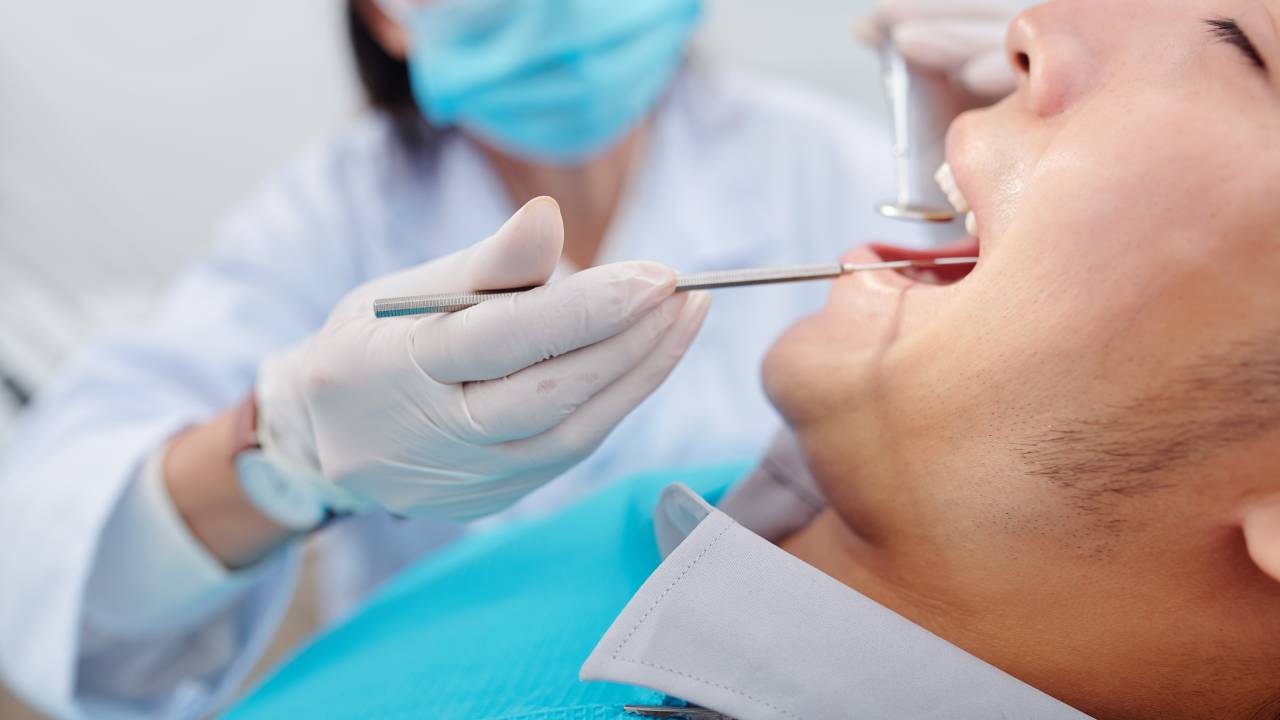
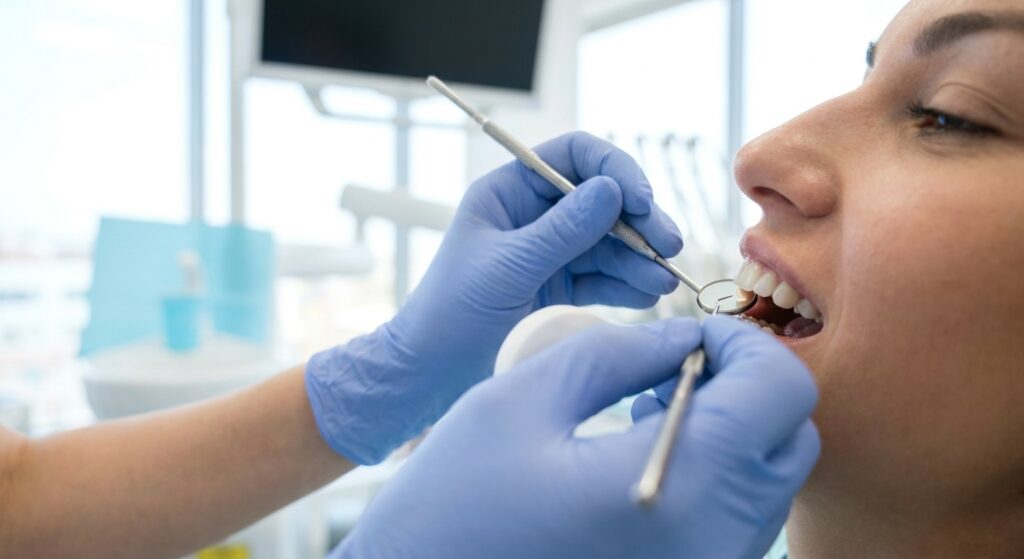
During exams at Reimels Dentistry, the intraoral video camera puts your veneer margins on a screen so you see what your dentist sees, and digital imaging shows areas the eye cannot reach. That matters because a dark line at the gumline could be harmless surface stain, an early chalky weak spot, or true decay, and each one calls for a different response. Years of silent damage are less common for patients who keep their visits, and most large repairs happen after long gaps between exams.
What Actually Breaks the Seal and Lets Bacteria In?
The seal around a veneer is a bond, not a wall. Resin cement chemically locks the veneer to etched enamel. Anything that wears down or stresses that cement line at the edge can open a microscopic gap where bacteria settle.
The bond is strongest when it attaches to healthy enamel. Bonds to dentin, the layer beneath enamel, are generally less predictable. This is one reason careful planning and conservative preparation matter so much. When we examine teeth for veneers, we measure how much enamel remains and adjust the preparation depth to keep the bonding surface as strong as possible.
Several everyday stresses can weaken the margin:
- Grinding or clenching, often during sleep
- Acidic drinks sipped slowly over hours, such as soda, sports drinks, or lemon water
- Hard scrubbing or gritty whitening toothpaste
- Chewing ice, pens, or fingernails, which can chip a veneer edge
Dentists call the resulting gap microleakage. It is a tiny opening where fluids and bacteria can slip under the edge of the restoration, into a space your toothbrush cannot reach.
The good news is that protecting the seal mostly comes down to reducing stress on it. If you wake up with a sore jaw or someone hears you grinding at night, tell your dentist and ask about options for protecting your veneers. Because Reimels Dentistry also provides dental sleep solutions, nighttime clenching and snoring can be evaluated in the same office that maintains your veneers. Drink acidic beverages with meals instead of sipping them all afternoon, and brush with a soft brush and gentle pressure.
What May Delay Veneers (At Least for Now)
Most decay problems under veneers are prevented before the first veneer is placed, by screening for conditions that would weaken the bond. Veneers placed over active decay, inflamed gums, or a stressed bite may face challenges early, so those issues typically need attention first.
A responsible veneer evaluation may delay or suggest alternative treatment for any of these reasons:
- Active cavities on the teeth being treated or on neighboring teeth
- Untreated gum problems, such as bleeding or inflamed gums
- Heavy grinding or a bite concern that has not been addressed
- Too little healthy enamel left to bond to
- Dry mouth or home care habits that may need adjustment before daily margin cleaning
Hearing “not yet” can feel discouraging when you have been hiding your smile, and it is natural to worry about being judged. A “not yet” is meant to help protect your investment. Reimels Dentistry offers preventive exams and cleanings, cosmetic dentistry, and Invisalign in one location, with an on-site orthodontist practice, so crowding or bite concerns can be addressed without a referral across town. For example, a patient with mildly inflamed gums might focus on professional cleanings and better home care, come back for a recheck, and then move forward with veneers on a healthier foundation.
Comprehensive care in one place also means the team that screens you is the same team that watches your margins for years afterward. Our dentists include multiple Fellows in the Academy of General Dentistry with more than 600 hours of continuing education, so experienced hands plan and maintain your veneers. If you are still deciding whether veneers fit your goals, learn more about porcelain veneers at Reimels Dentistry before you book.
Three Habits That Help Keep Your Veneer Edges Healthy for Years
Once your veneers are in place, prevention comes down to three habits. Brush twice a day with a non-abrasive fluoride toothpaste. Clean between your teeth once a day, paying extra attention to each veneer’s gumline. Keep your professional cleanings and exams every six months.
Brush gently, twice a day. With veneers, use a soft brush angled toward the gumline. Skip gritty whitening pastes and charcoal products, which can scratch the margins and dull the surface. We recommend brushing in the morning after breakfast and at night before bed, spending at least two minutes each time.
Floss into the margin, not just between teeth. Curve the floss into a C shape around each tooth and slide it gently just below the gumline, where the veneer edge sits. If floss catches or shreds at the same tooth every night, note which tooth it is and mention it at your next visit. A water flosser may help, but floss still reaches tight contacts effectively.
Keep your six-month visits. Your hygienist cleans the margin areas you cannot reach well at home, and your dentist checks the bond. At Reimels Dentistry, the intraoral video camera lets you see any plaque buildup or staining for yourself.
If dental anxiety has kept you away from cleanings, that avoidance is a bigger risk to your veneers than any food you eat. Sedation dentistry is available for your ultimate comfort, so a checkup stays manageable.
What Happens If Decay Does Show Up Under a Veneer?
If decay is caught early at the edge, it may sometimes be addressed without removing the veneer. If it has reached the dentin beneath, the veneer usually has to come off. The decay is then cleaned out, the tooth is repaired, and the veneer is rebonded or replaced.
Treatment typically follows this sequence:
- Find and measure the concern. Your dentist uses an exam, the intraoral camera, and digital imaging to see how far the decay extends.
- Choose the least invasive approach. A small spot at the margin may be repaired in place.
- Remove the veneer if needed. Sometimes it comes off intact and can be rebonded, but more often a new veneer is needed.
- Clean out the decay and rebuild the tooth. If decay has reached the nerve, your dentist will explain what additional treatment the tooth may need before a new veneer can be placed. If a tooth cannot be saved, extraction and a single dental implant, planned with computer-guided implant surgery, are available in the same office.
- Rebond or replace the veneer. For a new veneer, a digital iTero scan captures the tooth’s shape, and the shade is matched to your neighboring teeth.
- Recheck and adjust home care. Your dentist reviews what may have allowed the decay to start so steps can be taken to reduce the risk of recurrence.
Throughout treatment, the focus is on your comfort. Local anesthesia numbs the area, and sedation dentistry is available if you feel anxious. If you have pain or swelling, same-day emergency appointments are available. Full smile makeovers, cosmetic care, and implant care all happen under one roof, so the same team that knows your case handles the repair. That is what advanced skills with a small-town touch looks like in practice.
What Do Porcelain Veneers Cost, and Why Does Prevention Protect That Investment?
At Reimels Dentistry, we price veneers per tooth, and the final fee depends on how many teeth are treated, how much preparation each tooth needs, and the lab work involved. We give you a specific fee at your consultation, before any treatment begins, so there are no surprises.
Cost ties directly to the question of how long teeth can rot under veneers. Replacing a veneer after decay usually means paying for the repair and a new veneer for that tooth. A routine cleaning and exam costs a small fraction of that.
Dental plans typically do not cover veneers placed for cosmetic reasons. Treating decay is restorative care, however, and may qualify for benefits depending on your plan. Reimels Dentistry accepts BCBS GRID+ plans, and our team can help you understand what your benefits may cover. Medicaid and Medicare are not accepted. You can also pay privately or finance treatment through Cherry, Sunbit, CareCredit, LendingClub, or Proceed Finance, which lets you spread the cost into manageable payments.
If you are weighing options, here is how the common choices compare:
| Option | What it covers | Relative cost | Typical lifespan with good care | Where decay can start | If decay develops |
|---|---|---|---|---|---|
| Porcelain veneer | Front surface of the tooth | Higher | Many patients experience 10 to 15 years or more | Margins at the gumline and edges | Remove, repair the tooth, rebond or replace |
| Composite bonding or veneer | Front surface, built up in resin | Lower | Many patients experience 5 to 7 years | Margins and areas where resin wears down | May be repaired or refreshed in place |
| Crown | Entire visible tooth | Higher | Many patients experience 10 to 15 years | Margin at or below the gumline | Remove crown, repair the tooth, make a new crown |
Composite is the budget-friendly alternative, but it stains and roughens more easily over time. Porcelain resists staining and keeps its smooth surface. Crowns remove more tooth structure and are usually saved for teeth that need more support than a veneer can provide. At your consultation, ask to talk through before and after examples so you can picture what each option looks like in a real smile.
Questions Patients Ask About Decay Under Veneers
Decay under veneers is often preventable, can be found early, and is usually addressable. Here are the questions patients most often bring to a veneer checkup.
How long can teeth rot under veneers without you knowing?
Early margin decay often causes no symptoms for months. Sensitivity or visible darkening usually appears only as it progresses, which is why dentists can often spot it during routine exams before you feel anything.
How long do porcelain veneers last?
With good home care and regular checkups, porcelain veneers can last anywhere from 10 to 15 years or longer, though individual results vary from patient to patient. Grinding, skipped cleanings, and decay at the margins are common reasons they may need replacing sooner.
Are there foods you cannot eat with veneers?
You can eat most foods normally. Avoid biting directly into very hard items like ice, hard candy, or bones with your front teeth, and do not use your teeth as tools. Porcelain resists staining, but the margins can pick up stain, so rinse after coffee, tea, or red wine.
How do dentists check for decay under veneers?
Dentists inspect the margins up close, view them on screen with an intraoral camera, and use digital imaging to look for cavities forming at the veneer edge or beneath the bond.
Does getting veneers make your teeth more likely to decay?
Veneers themselves do not raise your decay risk. They do create margins that need careful daily cleaning and professional maintenance to stay cavity-free.
What does decay under a veneer feel like?
At first it often feels like nothing. As it progresses, you may notice sensitivity to cold, a dark line at the gumline, or pain when you bite.
Can you save a veneer if the tooth underneath has a cavity?
Sometimes. If the veneer comes off intact, it may be rebonded after the cavity is treated, although a new veneer is often made once the tooth is restored.
How often should you see a dentist after getting veneers?
Plan on every six months for a cleaning and margin check. That is the same schedule commonly recommended for natural teeth, and it matters even more for bonded restorations.
Get Your Veneer Edges Checked Before a Small Concern Grows
One reliable way to know what is happening under your veneers is to have the margins examined. Reimels Dentistry offers veneer consultations and maintenance exams for patients in Huntersville, Charlotte, and Cornelius.
At your visit, your dentist reviews each margin with you on the intraoral camera, checks the bond, takes digital imaging where it is needed, and explains what looks healthy and what deserves watching. You leave with a prevention plan built around your mouth, including your grinding habits, your drink choices, your gums, and how your veneers were placed. With Patient-Focused Care, you are treated like a member of our family, with plain answers and no pressure, even if it has been years since your last visit.
Here is one thing you can do tonight. When you floss, notice whether the floss snags or shreds at any single veneer edge, and whether one tooth zings when you drink cold water. Write down which tooth it is and bring that note to your appointment. That one detail helps your dentist look in exactly the right place.
Schedule a veneer consultation or maintenance exam at Reimels Dentistry in Huntersville, NC, to have your veneer margins evaluated and receive a personalized prevention plan for exceptional dental care that lasts.
Keep Your Veneers and Natural Teeth Healthy for Years to Come
If you’re worried about decay beneath your veneers or want to make sure your smile stays protected, regular preventive care makes all the difference. The team at Reimels Dentistry in Huntersville, NC can examine your veneers, assess the health of the underlying tooth structure, and create a maintenance plan tailored to your needs. Give us a call to schedule your next checkup and get the answers you’re looking for.
This article is for general education and is not a diagnosis. Treatment needs, costs, and outcomes vary by patient.