A custom oral appliance is the most common alternative to CPAP for adults with obstructive sleep apnea. It is a mouthpiece made by a dentist and worn at night to hold the lower jaw slightly forward so the airway stays open. Reimels Dentistry in Huntersville, NC provides sleep apnea treatment as part of its general and family dental care. Treatment is planned together with the physician who manages your sleep study and diagnosis.
This guide covers how oral appliances work, how they compare with CPAP, the main appliance types, side effects to watch for, and what to expect from a dental sleep visit at Reimels Dentistry in the Huntersville, Charlotte and Cornelius area.
Oral Appliance Therapy for Sleep Apnea
Understanding Oral Appliances
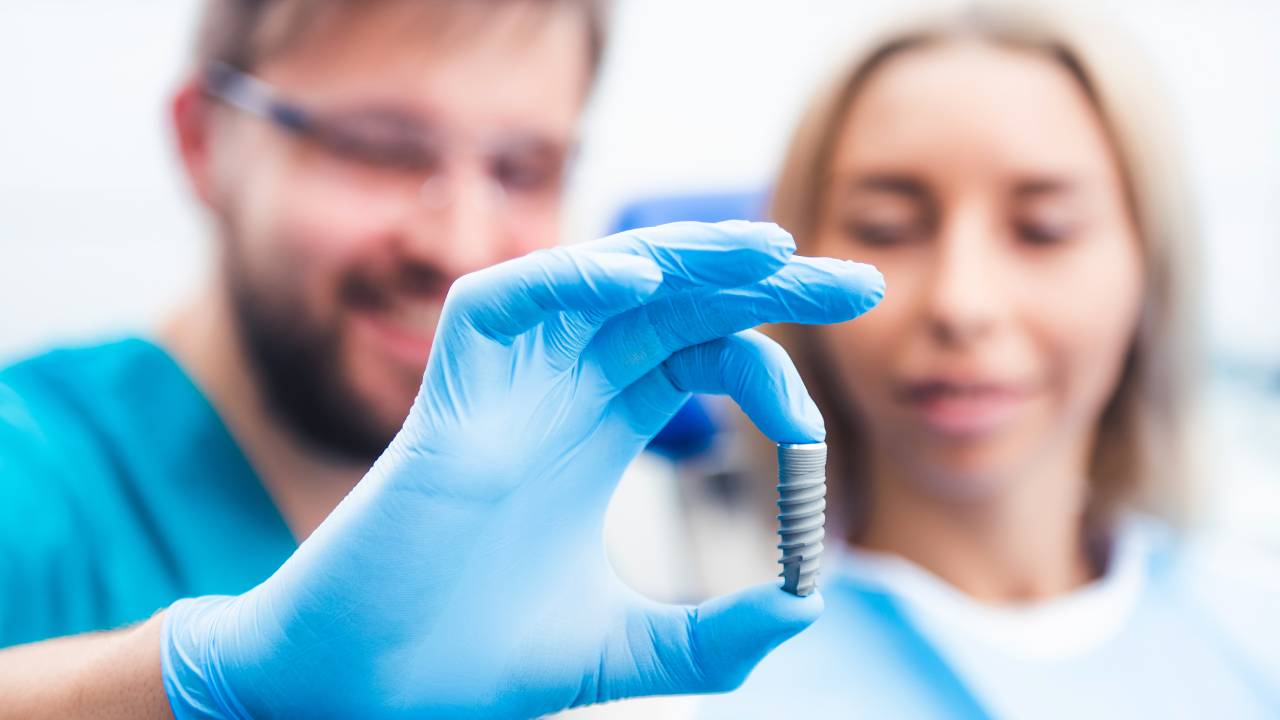
Oral appliances are dental devices that treat obstructive sleep apnea (OSA) by holding the jaw or tongue in a position that keeps the airway clear during sleep. They fit over the upper and lower teeth, much like a mouth guard. In obstructive sleep apnea, the soft tissues at the back of the throat relax and collapse during sleep. Breathing pauses or becomes shallow, and sleep is broken up through the night. Moving the lower jaw forward pulls the tongue and nearby tissues forward too, which leaves more room for air to pass.
Harvard Health describes oral appliances as one of the main options for people who cannot use CPAP. They are a common choice for people whose apnea falls in the mild to moderate range, and for those who have tried a CPAP machine and could not keep using it.
There are two main kinds of oral appliances:
| Type of Oral Appliance | Mechanism of Action |
|---|---|
| Mandibular Advancement Device (MAD) | Moves the lower jaw forward to keep the airway open |
| Tongue-Retaining Device (TRD) | Holds the tongue forward so it does not fall back into the throat |
Why People Look for a CPAP Alternative
CPAP works by blowing pressurized air through a mask to hold the airway open. It is effective when it is used, but many people find it hard to wear every night. Common complaints include mask discomfort, air leaks, dry mouth, noise, feeling closed in, and the hassle of traveling with the machine. An appliance that sits in a drawer helps nobody, and the same is true of a CPAP machine. Choosing between the two is often a question of which one you will actually use.
Reasons people give for considering an oral appliance:
- Comfort: There are no straps, hoses or mask against the face.
- Portability: The appliance is small and fits in a case, which helps with travel and overnight stays.
- No power needed: It works anywhere, with no electricity, distilled water or filters.
- Quiet: No machine noise for you or a bed partner.
- Fits a routine: Many people find it easier to wear something that feels like a night guard.
The American Academy of Sleep Medicine and American Academy of Dental Sleep Medicine clinical practice guideline recommends that sleep physicians consider prescribing an oral appliance, rather than no treatment, for adults with obstructive sleep apnea who cannot tolerate CPAP or who prefer an alternative. The same guideline addresses oral appliances for primary snoring without sleep apnea.
CPAP vs. Oral Appliance Therapy
Comparing the two comes down to how well each one opens the airway, how consistently you will use it, and what suits your health and daily life.
Comparative Effectiveness
CPAP is generally considered the most reliable way to lower the number of breathing interruptions per hour, measured as the apnea-hypopnea index (AHI). It is usually the first recommendation for severe sleep apnea. Oral appliances also reduce AHI, though in many people they reduce it less completely than CPAP does.
| Factor | CPAP | Custom Oral Appliance |
|---|---|---|
| How it works | Pressurized air through a mask | Holds the lower jaw forward |
| Typical role | First-line for many patients, especially severe OSA | Option for CPAP intolerance or preference, often mild to moderate OSA |
| Equipment | Machine, hose, mask, power | Small two-piece or one-piece dental device |
| Travel | Bulkier, needs power | Fits in a pocket-sized case |
| Follow-up | Mask fitting and usage checks | Dental adjustments and a follow-up sleep test |
Adherence and Real-World Benefit
How well a treatment works on paper and how much it helps you in practice are two different things. A treatment that lowers AHI very well but is worn only part of the night may help less than one that lowers AHI somewhat less but is worn all night, every night. That is why a sleep physician often suggests an oral appliance for patients who have struggled with CPAP.
Some people use both. For example, they may use CPAP at home and an oral appliance when traveling. Any plan like this should be worked out with your sleep physician.
Choosing the right treatment should be based on both clinical effectiveness and your own comfort and lifestyle. Your physician confirms the diagnosis and severity. The dentist checks whether your mouth can support an appliance and then makes and adjusts it.
Types of Oral Appliances
Mandibular Advancement Devices (MADs)
Mandibular advancement devices are the most frequently prescribed type of oral appliance for sleep apnea. They reposition the lower jaw (mandible) slightly forward, which increases the space at the back of the throat and reduces airway collapse during sleep.
| Feature | Description |
|---|---|
| Design | Custom-fitted upper and lower trays, similar in look to a sports mouth guard |
| Adjustability | Many designs allow the jaw position to be moved forward gradually |
| Typical use | Mild to moderate OSA, and some people with more severe OSA who cannot use CPAP |
Adjustability matters. The dentist usually starts at a comfortable jaw position and advances it in small steps over several weeks. Each step balances airway benefit against jaw comfort, a process called titration.
Tongue-Retaining Devices (TRDs)
Tongue-retaining devices hold the tongue forward, often with a small suction bulb at the front, so it does not fall back into the throat.
| Feature | Description |
|---|---|
| Design | Holds the tip of the tongue forward |
| Usage | Keeps the tongue from blocking airflow |
| Suitability | Sometimes considered for people who cannot use a MAD, such as those with few teeth to anchor one |
TRDs are used less often than MADs, and some people find them harder to get used to.
A Note on Tongue Stimulation
You may read about devices that stimulate the tongue muscles. The best known is hypoglossal nerve stimulation. It is a surgically implanted device that a physician places, not a dental appliance. Harvard Health covers it among the other options beyond CPAP. If you are interested in it, ask your sleep physician. It is a separate treatment from the oral appliances a dentist provides.
Considerations for Oral Appliances
Custom-Made vs. Non-Custom Devices
Oral appliances come in two broad forms. Custom devices are made from impressions or scans of your teeth. Non-custom devices are over-the-counter or “boil-and-bite” products.
| Feature | Custom-Made Devices | Non-Custom Devices |
|---|---|---|
| Fit | Made for your teeth and bite | Generic sizing |
| Adjustability | Can be titrated step by step | Limited or none |
| Comfort | Designed for nightly, long-term wear | Often bulky or loose |
| Supervision | Fitted and monitored by a dentist | Usually self-fitted |
A store-bought snoring device may reduce the noise but leave the apnea untreated. Snoring and sleep apnea are not the same. If you snore loudly, wake up gasping, or feel tired during the day, talk with a physician about a sleep evaluation before trying anything on your own.
Suitability for Different Severity Levels
Severity is a key factor in choosing a treatment, and a physician determines it from your sleep test.
| Severity Level | Typical Approach |
|---|---|
| Mild | Custom oral appliance is a common option, along with other measures your physician may suggest |
| Moderate | Custom adjustable appliance or CPAP, depending on tolerance and preference |
| Severe | CPAP usually comes first; an oral appliance may be considered if CPAP cannot be tolerated |
Your teeth and jaw also matter. An appliance needs enough healthy teeth to hold onto, gums in reasonable health, and a jaw that can move forward comfortably. Active gum disease, loose teeth, or significant jaw joint problems may need attention first. These are the kinds of things checked at an exam.
Dental Changes and Side Effects
Oral appliances are a reasonable option for many people, but long-term use can affect the teeth and bite. You should know this before you start.
Long-Term Effects on Dental Health
Holding the jaw forward night after night can gradually shift the teeth and bite. Changes reported with long-term appliance use include:
| Dental Change | What It Means |
|---|---|
| Decrease in overbite | Upper front teeth overlap the lower teeth less |
| Decrease in overjet | Less horizontal gap between upper and lower front teeth |
| Change in occlusion | The way back teeth meet can shift |
| Fewer contact points | Some back teeth may touch less when you bite |
Research suggests that greater jaw advancement tends to come with more bite change. This is one reason dentists advance the jaw only as far as needed. These changes are often slow and may go unnoticed at first, so regular dental checks help catch them early.
Potential Side Effects to Consider
| Side Effect | Description |
|---|---|
| Jaw discomfort | Soreness, especially in the first weeks or after an adjustment |
| Tooth tenderness | Teeth may feel sore in the morning |
| Bite changes | The bite may feel “off” for a short time after removing the device, or change gradually over time |
| Increased salivation or dry mouth | Either can happen, especially early on |
| Crossbite | A risk of premolar crossbite with prolonged use |
Many people find that early soreness eases as they get used to the device. Your dentist may suggest morning jaw exercises or a small positioning piece to help the bite settle after removing the appliance. Tell your dentist about any ongoing pain, jaw clicking, or changes in how your teeth fit.
What to Expect at a Dental Sleep Visit
The AASM and AADSM guideline recommends that a qualified dentist provide oral appliance therapy, that patients have regular dental follow-up for side effects and bite changes, and that sleep physicians do follow-up testing to confirm the appliance is working. The usual sequence looks like this:
- Diagnosis by a physician. A sleep test confirms obstructive sleep apnea and its severity. The physician recommends or prescribes an oral appliance.
- Dental exam. The dentist checks your teeth, gums, existing dental work, jaw joints and how far your jaw moves forward.
- Records and fabrication. Impressions or scans are taken and the custom appliance is made.
- Fitting. You learn how to put it in, take it out and clean it.
- Adjustment visits. The jaw position is advanced gradually based on comfort and symptoms.
- Follow-up sleep testing. Your physician confirms that breathing during sleep has improved.
- Ongoing dental checks. Regular visits monitor fit, wear and bite changes.
At Reimels Dentistry, sleep apnea care sits alongside the practice’s general, restorative and implant dentistry in one location. The practice includes dentists who are Fellows of the Academy of General Dentistry. If your exam shows that gum disease treatment, a root canal, an extraction or other dental work is needed before an appliance can be made, that care can usually be handled in the same office at Reimels Dentistry.
Popular Oral Appliance Designs
Many commercial oral appliances exist. Some widely known custom designs include:
| Design | Notable Features |
|---|---|
| TAP-style | Hook mechanism with fine forward adjustment |
| Herbst-style | Telescoping arms link upper and lower trays; named for Emil Herbst |
| Dorsal-style | Side fins guide the lower jaw forward; adjustable |
| EMA-style | Thinner trays with interchangeable straps that set jaw position; less durable than bulkier designs |
All of these require custom fitting and periodic checkups. The best choice depends on your bite, jaw movement, any grinding habits, dental work such as crowns or implants, and comfort. Your dentist recommends a design after the exam.
Caring for Your Appliance
- Rinse and brush the appliance gently each morning with cool water.
- Avoid hot water, which can warp the material.
- Store it dry in its case, away from pets.
- Bring it to every dental visit so the fit can be checked.
- Keep up with your own brushing and flossing, since the appliance covers your teeth overnight.
General oral health guidance is available from the ADA’s MouthHealthy site and the National Institute of Dental and Craniofacial Research.
Insurance and Payment Notes
A custom oral appliance for diagnosed sleep apnea is often billed to medical insurance rather than dental insurance, and coverage depends on your plan’s requirements. Reimels Dentistry is in-network with Blue Cross Blue Shield and accepts private pay. The practice bills other carriers, including Aetna, Cigna, Delta Dental, MetLife and UnitedHealthcare, as out-of-network. The Reimels Dentistry practice does not accept Medicare or Medicaid. Check with your insurer about what your specific plan requires before treatment.
Finding the Right Fit
An oral appliance will not be the answer for everyone with sleep apnea. For many people who could not stay with CPAP, though, it is a practical and well-supported option. A good result depends on three things: an accurate diagnosis from a physician, a careful dental exam, and steady follow-up with both your physician and your dentist. Patients in Huntersville, Charlotte and Cornelius who want to explore a CPAP alternative can start with a dental evaluation at Reimels Dentistry and work with their sleep physician to decide on the next step.