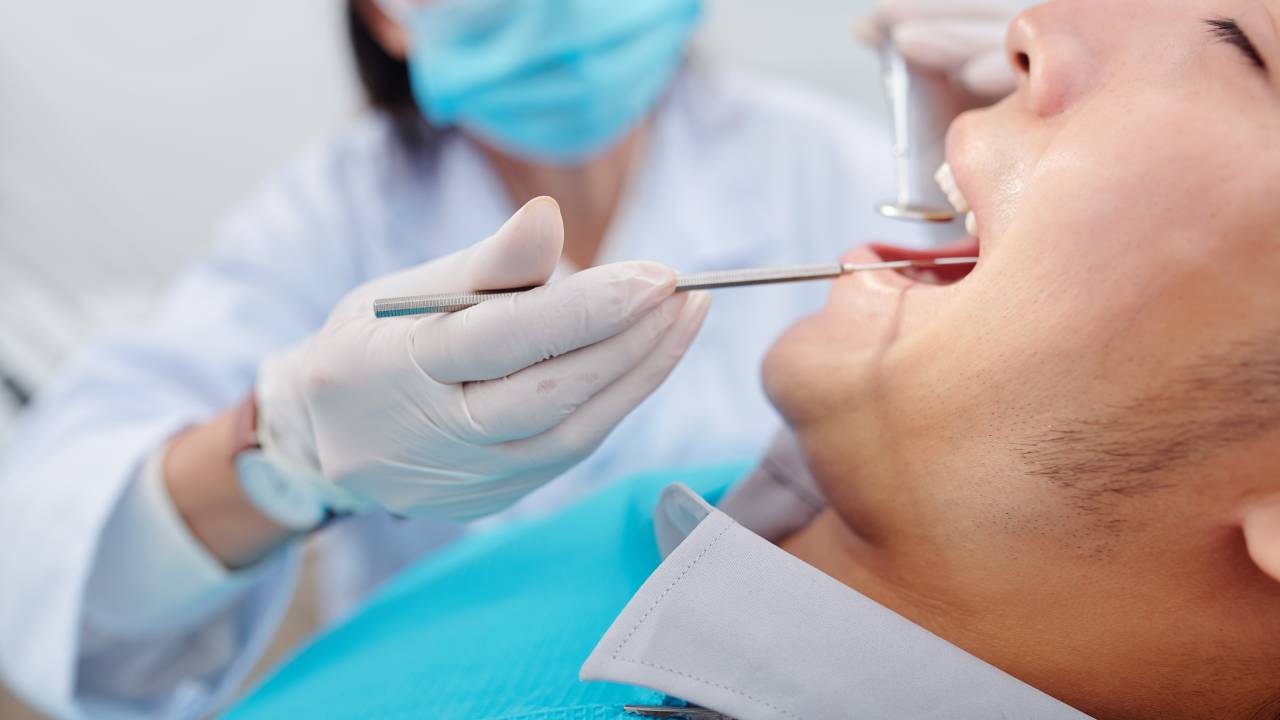
An insurance approved aesthetic dental restoration is a tooth repair that looks natural and that your dental plan agrees to help pay for because it treats a real problem, such as decay, a fracture, a failing filling, or a missing tooth. Insurers generally pay toward restorations that restore health and function, even when the material chosen also looks good, and they generally decline treatment done only to change appearance. At Reimels Dentistry in Huntersville, a tooth-colored filling replacing a cavity or a crown rebuilding a cracked molar may qualify for benefits, while porcelain veneers placed only to brighten a smile usually will not. The rest of this guide explains how that line is drawn, which procedures tend to fall on each side, and how to approach your own plan before treatment.
What Does “Aesthetic” Mean in Dental Restoration?
In everyday use, the dictionary definition of aesthetic as an adjective describes something concerned with beauty or with how an object looks. Aesthetics, as a noun, is the study or appreciation of beauty. In dentistry, the meaning is narrower and more practical: an aesthetic restoration is one designed to blend with natural teeth in color, shape, and translucency, so that a repaired tooth looks aesthetically similar to its neighbors.
That definition matters for insurance because “aesthetic” and “cosmetic” are not the same thing to a claims reviewer. A restoration can be aesthetic and still be necessary. Some examples:
- A tooth-colored composite filling placed to treat a cavity on a front tooth
- A porcelain or zirconia crown that rebuilds a tooth weakened by a large fracture
- An implant crown that replaces a missing tooth and is shaded to match the surrounding teeth
- A crown placed after root canal therapy to protect the treated tooth
In each example, the reason for treatment is health or function, and the natural appearance is a feature of the material. By contrast, a purely cosmetic procedure is one where the only goal is a change in appearance, such as whitening healthy teeth or covering well-shaped, healthy teeth with veneers.
Research on aesthetic restorations also points out that natural-looking materials need ongoing care to keep their appearance and function. A review on the role of the dental hygienist with aesthetic restorations describes how professional cleaning and home care affect the surface and longevity of tooth-colored work, which is one reason routine exams and cleanings remain part of the picture after a restoration is placed.
How Does Dental Insurance Usually Categorize Procedures?
Most dental insurance plans sort covered procedures into three groups: preventive, basic, and major. Understanding these categories helps you predict how a plan may treat a restoration before you schedule it.
- Preventive care includes routine services such as exams and cleanings.
- Basic procedures commonly include fillings and extractions.
- Major services include more complex treatment such as crowns, bridges, and, on many plans, dental implants.
Cosmetic procedures, including teeth whitening and veneers, are often placed outside these categories because their main purpose is appearance rather than health. Each plan sets its own percentages, waiting periods, annual maximums, and exclusions, so the same procedure can be handled differently from one policy to the next. Your benefits booklet or your insurer’s member portal is the most reliable place to see how your specific plan assigns each category.
Which Restorative Procedures Are Most Likely to Be Covered?
Restorative procedures that repair disease or damage are the ones insurers most often help pay for. The table below summarizes how common treatments are typically handled. It describes general patterns, not a promise of payment under any particular policy.
| Procedure | Typical coverage status | Notes |
|---|---|---|
| Dental fillings | Usually covered | Generally a basic procedure; material choice can affect benefits |
| Root canal therapy | Generally covered | Often classified as basic or major depending on the plan |
| Dental crowns | Commonly covered | Usually a major service when the tooth needs it |
| Dental implants | Coverage varies | Some plans include implants; others limit or exclude them |
| Zirconia fixed bridges | Coverage varies | Often handled as a major service when replacing missing teeth |
| Full and partial dentures | Often covered | Usually a major service; frequency limits often apply |
| Porcelain veneers | Rarely covered | Usually considered cosmetic |
| Teeth whitening | Rarely covered | Considered cosmetic on most plans |
The pattern behind the table is consistent: the more clearly a treatment restores health or function, the more likely a plan is to contribute toward it.
Do Tooth-Colored Fillings Count as Insurance Approved Aesthetic Restorations?
Tooth-colored fillings are often the most common example of an aesthetic restoration that insurance helps pay for, because the filling treats decay or damage. The American Dental Association’s overview of materials for direct restorations describes the main options used to fill teeth directly, including amalgam, composite resin, and glass ionomer materials, each with different properties for strength, appearance, and placement.
Insurance plans do not always treat these materials the same way. Some policies pay benefits for a tooth-colored filling at the same level as a silver one, while others apply what is often called an alternate benefit, paying only up to the cost of the less expensive material, particularly on back teeth. When that happens, the patient is responsible for the difference.
| Filling material | Typical coverage |
|---|---|
| Composite resin | Usually covered, sometimes subject to an alternate benefit on back teeth |
| Amalgam | Usually covered |
| Ceramic | May be covered depending on the plan |
| Glass or resin ionomer | Often covered |
Treating decay early tends to keep restorations smaller. The National Institute of Dental and Craniofacial Research provides public information on how tooth decay develops and why early treatment matters.
How Do Insurers Decide Between Cosmetic and Necessary Treatment?
Insurers decide whether a procedure is cosmetic or necessary mainly by looking at the documented reason for treatment. A claims reviewer typically wants to know whether something is wrong with the tooth, such as decay, fracture, infection, wear, or loss, and whether the proposed restoration is a reasonable way to fix it.
| Treatment type | Typical coverage status |
|---|---|
| Porcelain veneers | Typically not covered when elective |
| Dental crowns | May be covered when needed for the health of the tooth |
| Dental implants | Coverage varies; plans may require documentation of need |
| Dental fillings | Usually covered as a basic restorative service |
| Orthodontic treatment | Covered on some plans, often with age limits or separate maximums |
Several factors influence the outcome:
- Diagnosis and records. X-rays, photographs, and clinical notes help show that a tooth needs repair.
- Plan language. Policies list their own exclusions, and many specifically exclude procedures done primarily for appearance.
- Frequency limits. A plan may pay for a crown on the same tooth only once in a set number of years.
- Annual maximums. Even a covered procedure may be paid only up to the plan’s yearly limit.
- Accidents. When teeth are damaged in an injury, documentation of the event can support coverage for repair, and some patients also have medical or accident coverage that applies.
Talking through your goals with your dentist helps separate the parts of a plan that address health from the parts that are elective. A treatment plan can often be phased so that necessary restorations are completed first and elective improvements are considered afterward.
How Does Insurance Work at Reimels Dentistry?
Reimels Dentistry is in-network with Blue Cross Blue Shield. The practice also accepts private pay patients.
For patients with Aetna, Americo, Cigna, Delta Dental, MetLife, UnitedHealthcare, or any other carrier, Reimels Dentistry is out-of-network and bills that plan’s out-of-network benefits. Whether your plan pays toward care from an out-of-network dentist, and how much, depends on the terms of your policy, so checking your out-of-network benefits before treatment is worthwhile.
The practice does not accept Medicaid or Medicare.
Because Reimels Dentistry provides comprehensive dentistry in one location, many restorative steps that might otherwise involve separate offices, such as extractions, bone grafting, implant surgery, root canals, crowns, bridges, and dentures, can be planned together. That can make it simpler to see the full sequence of treatment and to submit it to your insurer as one coordinated plan.
How Does the Pre-Approval Process Work?
Pre-approval, often called pre-authorization or a predetermination of benefits, is a request your dental office sends to your insurer before treatment to ask how the plan would handle the proposed procedures. It is not a guarantee of payment, since eligibility, remaining maximums, and plan terms can change, but it gives a clearer estimate before work begins.
A predetermination request usually includes:
- A detailed treatment plan listing each proposed procedure
- Procedure codes for each service, known as CDT codes
- Supporting records such as X-rays, photographs, and clinical notes
- Documentation of an accident or injury, when that is the reason for treatment
When the insurer responds, the estimate typically shows which procedures it expects to pay toward, at what level, and which items it considers excluded. Reading that response alongside your policy’s limitations and exclusions helps you see where an aesthetic restoration is likely to be supported and where a portion may be your responsibility.
What Can You Do to Improve Your Chances of Coverage?
A collaborative approach with your dental office tends to produce the clearest picture of what insurance will do. Useful steps include:
- Know your network status. If your plan is Blue Cross Blue Shield, Reimels Dentistry is in-network. For other carriers, ask your insurer how out-of-network dental care is paid.
- Share your plan details early. Giving the office your insurance information before your visit allows benefits to be checked and a predetermination to be prepared if needed.
- Ask about optional cosmetic riders. Some plans offer add-on coverage for certain cosmetic services for an additional premium. Your insurer can tell you whether one exists on your policy.
- Separate necessary work from elective work. Completing restorations needed for health first, and considering cosmetic changes afterward, often makes benefits easier to apply.
- Plan around your annual maximum. For larger treatment plans, spreading work across benefit years may help you use more of your coverage.
- Ask about payment options. Where insurance does not cover the full cost, ask the office what payment arrangements are available.
How Do Insurers Treat Specific Aesthetic Restorations?
Dental implants
Dental implants replace missing teeth with a post placed in the jawbone and a crown, bridge, or denture attached on top. Insurance treatment of implants varies widely. Some plans include implants as a major service, some cover only the crown portion, and some exclude implants entirely. Missing teeth can affect chewing, speech, and the position of neighboring teeth, and documentation of those effects can support a claim where the plan allows it. Reimels Dentistry offers single dental implants, full mouth dental implants, All-on-4 dental implants, implant supported bridges, implant supported dentures, same-day dental implants, bone grafting, and computer-guided implant surgery.
Root canal therapy and crowns
Root canal therapy treats infection or inflammation inside a tooth, and a crown is often placed afterward to protect it. Many plans pay toward both, though the crown may fall under a different category and percentage than the root canal itself.
| Procedure | Coverage details |
|---|---|
| Root canal therapy | Often covered |
| Crown after root canal | May be included, depending on plan |
Dental crowns
Dental crowns cover and strengthen teeth that are badly damaged, weakened, or heavily filled. Most plans pay toward a crown when the tooth needs one, although some apply an alternate benefit based on material.
| Crown material | Typical coverage insight |
|---|---|
| Porcelain or ceramic | Usually covered when the crown is necessary |
| Zirconia | Usually covered when necessary, subject to plan terms |
| Metal | Often included |
| Porcelain-fused-to-metal | Usually covered |
Dental veneers
Porcelain veneers are thin shells bonded to the front of teeth to change their shape, color, or alignment. Because veneers are usually chosen for appearance, most plans treat them as cosmetic and do not pay toward them. Partial benefits are sometimes possible when a veneer is used to repair a damaged tooth rather than to change a healthy one, but this is limited and depends on the plan. Reimels Dentistry offers porcelain veneers and full smile makeovers, and a consultation can clarify which parts of a plan, if any, address a health need.
What Should You Ask Before Starting Treatment?
Before beginning any aesthetic restoration, a short list of questions can prevent surprises:
- Is this procedure being recommended to treat a problem, or is it elective?
- Which category does my plan assign it to, and at what percentage?
- Is the dentist in-network or out-of-network for my plan?
- Does my plan apply an alternate benefit for tooth-colored materials?
- How much of my annual maximum remains this year?
- Would a predetermination of benefits be helpful for this treatment plan?
Answering these with your insurer and your dental office gives you a realistic view of how your insurance may support a natural-looking restoration, and which portion would be paid privately.